The Battle Is the Lord's The Song of Jahaziel Then
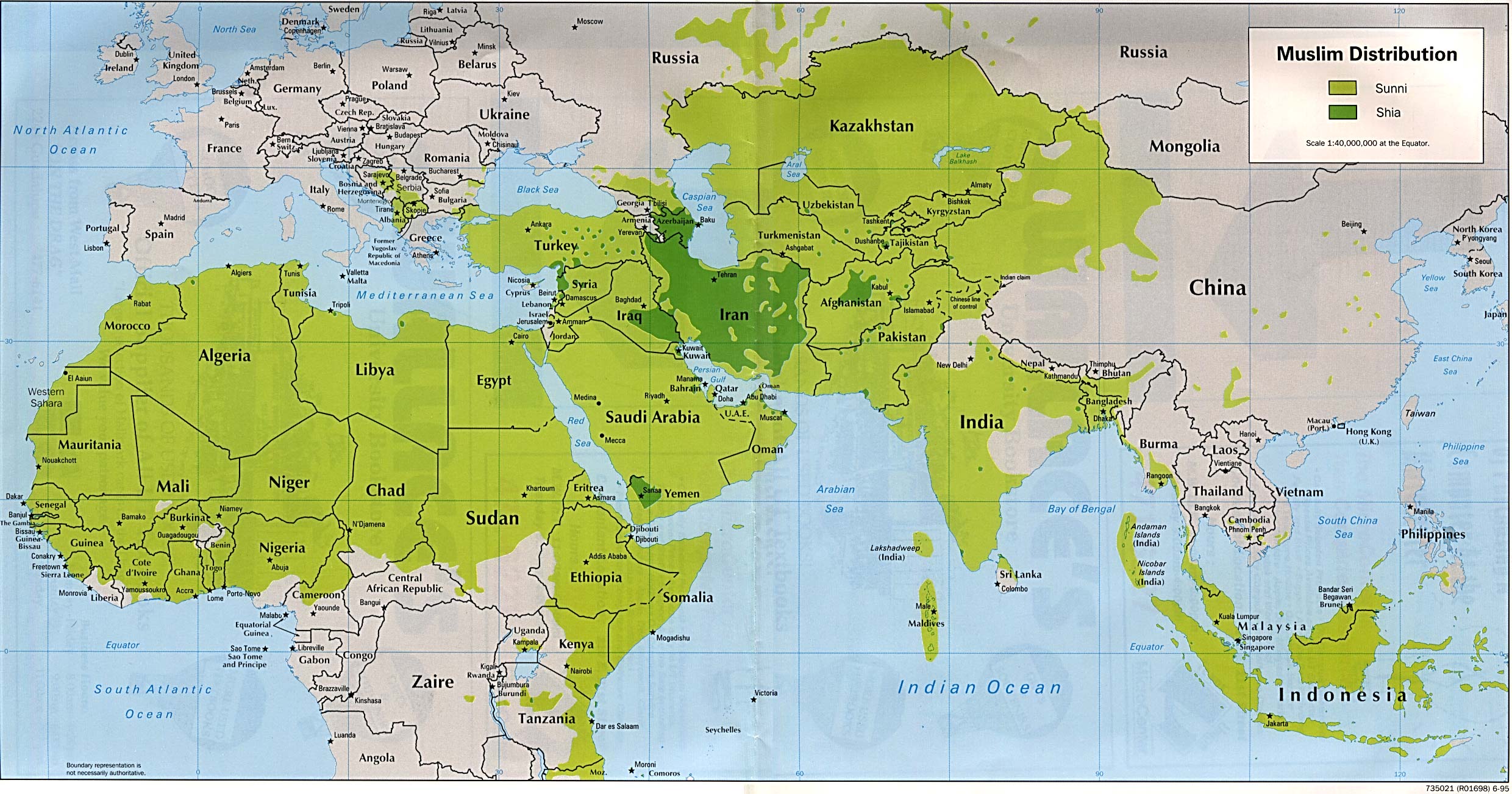
shall the LORD go forth, and fight against those nations, A verse-by-verse study in Psalm 83 Old Testament prophecies frequently have two fulfillments. One applies to the local situation that inspired the prophecy. The second and larger fulfillment refers to a future event--often associated with the end times. In order to understand the greater fulfillment, one must look at the immediate occasion. The historic event of some prophecies is difficult to discern this far from the story, especially when the connection between the two is not immediately evident. One clue which connects this psalm with the event which inspired its author is in the inspired title of the Psalm.1 It is “A Psalm of Asaph.” Asaph was one of the three choir directors of King David (1 Chronicles 25:1). The members of this choir in succeeding generations were known as “the sons of Asaph.” Chapters in the book of Psalms which appear under the title “A Psalm of Asaph” refer either to songs composed by Asaph, or by one of his sons, or was composed specially to be sung by this choir. One of the sons of Asaph, who wrote a prophesy concerning a battle which closely resembles that described in this psalm, is mentioned in 2 Chronicles 20:14, “Then upon Jahaziel the son of Zechariah, the son of Benaiah, the son of Jeiel, the son of Mattaniah, a Levite of the sons of Asaph, came the Spirit of the LORD in the midst of the congregation.” The battle described in this chapter took place during the reign of Jehoshaphat and is associated by many students of the Bible with that mentioned in Joel 3:1-3 in “the valley of Jehoshaphat.” In that war the forces of Moab and Ammon, confederate with others, sought to invade Israel. While only two allies, Syria and Edom, are named, the account implies a host from many nations joined the invasion. The invaders took up their position in the area of En-Gedi on the southwest shore of the Dead Sea. Jehoshaphat offers a prayer to Jehovah, pleading the smallness of his forces. He is informed: “Be not afraid nor dismayed by reason of this great multitude; for the battle is not yours, but God’s (2 Chronicles 20:15). Singers are told to assemble in the plains of Tekoa on the plateau on the other side of the Judean hills. When the enemy advanced by the “cliff of Ziz,” at the peak of the pass leading to Jerusalem, the Kohathite singers were to begin singing praise to God. The invading forces turned on each other and the succeeding anarchy in their ranks brought an aborted end to the invasion. This is apparently the background for Psalm 83. The Prayer--Psalm 83, verses 1-4 “Keep not thou silence, O God: hold not thy peace, and be not still, O God. For, lo, thine enemies make a tumult: and they that hate thee have lifted up the head. They have taken crafty counsel against thy people, and consulted against thy hidden ones. They have said, Come, and let us cut them off from being a nation, that the name of Israel may no more be in remembrance.” This plea of helplessness against an attack by surrounding nations is mirrored in the prayer of Jehoshaphat recorded in 2 Chronicles 20:11, 12, where he prays in part, “Behold, I say, how they reward us, to come to cast us out of thy possession, which thou hast given us to inherit. O our God, wilt not thou judge them? For we have no might against this great company that cometh against us; neither know we what to do: but our eyes are upon thee.” The request that God keep not silence manifests a declining faith based on the many times God permitted enemies to conquer because of Israel’s unfaithfulness. These defeats had resulted many times in Israel becoming tributary to surrounding nations. But now, Jehoshaphat fears, the situation is more dire, their very existence as a people is threatened by the invading confederacy. These same sentiments are echoed in recent times. The pogroms of Israel’s Diaspora and the decimation of the Jews under the Nazi holocaust have brought many Israelis to conclude that they can no longer trust in God for deliverance. Since the formation of the state of Israel in 1948 their repetitive victories over onslaughts by their Arab neighbors have given rise to the thought that they can only trust in their formidable military might and the alliances they have formed, particularly with the United States. Recent events, however, with the Palestinian intifada, the solidarity of the Arab League, and the guerilla attacks by Hamas, Hezbullah, and the Al Aqsa Martyr brigade, among others, have forced the Israelis to face the fact that their enemies, even while proclaiming a desire to live at peace, may be actually plotting the complete destruction of Israel. Not only is the desire to cut them off from being a nation, but even includes the revising and rewriting of history to blot out their name from being “in remembrance.” The League of Ten--Verses 5-8 “For they have consulted together with one consent: they are confederate against thee: the tabernacles of Edom, and the Ishmaelites; of Moab, and the Hagarenes; Gebal, and Ammon, and Amalek; the Philistines with the inhabitants of Tyre; Assur also is joined with them: they have holpen the children of Lot. Selah.” Comparing the confederacy described here with that which is allied against Israel in Ezekiel 38 and 39, it has been noted that this one is all Semitic while that in the Ezekiel passage is largely non-Semitic. Therefore many Bible students understand these two conflicts to be different, the one in this psalm preceding the one in Ezekiel. There are, however, two main methods of interpreting Bible names in prophecy. The usual method is to treat the names genealogically, tracing the present day descendants of the nations mentioned in prophecy. The alternate method is to trace them geographically, identifying the biblical peoples with the inhabitants of the same regions today. While this approach also reveals many non-Semitic peoples in the Ezekiel list of seven nations, it also demonstrates that the catalog of nations in both Psalms and Ezekiel describe the main body of Muslim countries which oppose present-day Israel (see map below where dark green areas denote Sunni Muslim majorities; the much darker green areas are dominated by the more fundamentalist Shia Muslims. Note: While India is indicated as being Muslim, most authorities list India as Hindu` though many Muslims do reside there. Map source: http://www.lib.utexas.edu/maps/world_maps/muslim_distribution.jpg).
Sunni [light green]
and Shia [darker green] While the confederacy of nations which joined Ammon and Moab in the battle mentions only Edom as a named partner, 2 Chronicles 20:1 mentions “other” besides the Ammonites and the second verse refers to a great multitude “from beyond the sea on this side Syria.” The Targum reads “beyond the west side of Syria,” referring to the desert lands between Syria and Nineveh. This matches well with the Hagarenes2 (or Hagarites) of 1 Chronicles 5:10, “And in the days of Saul they made war with the Hagarites, who fell by their hand: and they dwelt in their tents throughout all the east land of Gilead.” Thus the coalitions of 2 Chronicles may match well with those in Psalm 83 and, though different than those in Ezekiel 38, may both refer in general to the forces of Islam so adamantly arrayed against Israel today. Assur, being with them, may imply that Iraq would be aligned with a Jordanian led invasion of Israel. Given the relative neutrality of Jordan today this would appear to be a future conflict. Historic Defeats--Verses 9-12 “Do unto them as unto the Midianites; as to Sisera, as to Jabin, at the brook of Kison: which perished at Endor: they became as dung for the earth. Make their nobles like Oreb, and like Zeeb: yea, all their princes as Zebah, and as Zalmunna: who said, Let us take to ourselves the houses of God in possession.” The prayer of the psalmist is reminiscent to that of Jehoshaphat in 2 Chronicles 20:12, “O our God, wilt thou not judge them? for we have no might against this great company that cometh against us; neither know we what to do: but our eyes are upon thee.” In the psalm the plea for help has two sections. The first calls to mind significant Jewish victories of the past. The second uses agricultural metaphors. Two great victories are remembered: that of the forces of Gideon against the Midianites and the defeat of the armies of Sisera by Deborah and Barak. Both of these were fought in the plains near Megiddo and are thus suggestive of the prophetic Battle of Armageddon (Revelation 16:16). Zebah and Zalmunna were kings of Midian, and Oreb and Zeeb were princes thereof. After the initial victory of Gideon’s force of 300 at Megiddo, the rest of the Israelites joined in pursuit of the Midianite host under the command of these rulers and soundly defeated them in the hills east of the river Jordan (Judges 7:25 to 8:13). In the case of Jabin, king of Hazor, and his general Sisera, Jewish armies under the command of Barak met them in battle in the valley where the river Kishon descended from Mt. Carmel. A flash flood mired the enemy’s chariots in the swollen waters of the stream and Israel was victorious, with the captain of the foe, Sisera, being slaughtered by the Kenite woman, Jael, with a tent peg (Judges 4 and 5). In both cases Jehovah fought the battle for Israel--through a flash flood in the case of Sisera and by discomfiting the Midianites so that anarchy broke out in their camp as Gideon’s three hundred burst upon them with the midnight trumpet blasts. Likewise, in the battle of Jehoshaphat, the Jewish armies were told to sit by and let the singers sing while God caused confusion among the invading forces and the Edomites fought against their fellow invaders, giving the victory to Israel. So it will also be in Israel’s final battle, as the prophet wrote, “Then shall the LORD go forth, and fight against those nations, as when he fought in the day of battle” (Zechariah 14:3). The Wheel, the Fire, and the Storm--Verses 13-15 “O my God, make them like a wheel; as the stubble before the wind. As the fire burneth a wood, and as the flame setteth the mountains on fire; So persecute them with thy tempest, and make them afraid with thy storm.” The wheel of which the psalmist writes is the threshing wheel. In harvest time, grain was gathered from the fields and laid out on a flat hard surface. A large wheel was then passed over the grain, separating the wheat from the chaff. The separated grains were then winnowed by being flung into the air, letting the light chaff blow away in the wind while the heavier kernels of wheat fell back to the threshing floor. Thus the invading forces, both in the immediate and long range fulfillments, served two purposes for Israel. First, they were God’s tool to test Israel’s obedience, and then they became as stubble meant for destruction. Of the first purpose we read in Isaiah 10:5,6: “O Assyrian, the rod of mine anger, and the staff in their hand is mine indignation. I will send him against an hypocritical nation, and against the people of my wrath will I give him a charge, to take the spoil, and to take the prey, and to tread them down like the mire of the streets.” But of the latter end of these tools of the Lord we read: “And I am very sore displeased with the heathen that are at ease: for I was but a little displeased, and they helped forward the affliction” (Zechariah 1:15). Some scholars translate the word for wheel as “rolling thing,” similar to our tumbleweeds. Threshing often took place on the mountain tops to take greater advantage of wind on the higher ground to blow away the chaff. The residue of chaff and tares was then burned, so that the mountains appeared to be on fire during the harvest. This same figure of speech is used of the end-time battles in Isaiah 17:13, “The nations shall rush like the rushing of many waters: but God shall rebuke them, and they shall flee far off, and shall be chased as the chaff of the mountains before the wind, and like a rolling thing before the whirlwind.” The final illustration is that of a storm, a figure often used in the Bible of the final battle of Armageddon (see Psalm 29:4-10). The Purpose of the Battle--Verses 16-18 “Fill their faces with shame; that they may seek thy name, O LORD. Let them be confounded and troubled for ever; yea, let them be put to shame, and perish: That men may know that thou, whose name alone is JEHOVAH, art the most high over all the earth.” The grand object of this final conflict is clearly repeated--”that they [the confederacy of enemies] may seek thy name” and again, “that men may know that thou . . . art the most high over all the earth.” The same purpose is similarly stated when God gives Israel the victory in Ezekiel 39:6,7: “And I will send a fire on Magog, and among them that dwell carelessly in the isles: and they shall know that I am the LORD. So will I make my holy name known in the midst of my people Israel; and I will not let them pollute my holy name any more: and the heathen shall know that I am the LORD, the Holy One in Israel.” The details of how God’s name will be known are spelled out in a description of the aftermath of this final conflict in Isaiah: “For I know their works and their thoughts: it shall come, that I will gather all nations and tongues; and they shall come, and see my glory. And I will set a sign among them, and I will send those that escape of them unto the nations, to Tarshish, Pul, and Lud [among the nations mentioned in Ezekiel 38], that draw the bow, to Tubal, and Javan, to the isles afar off, that have not heard my fame, neither have seen my glory; and they shall declare my glory among the Gentiles” (Isaiah 66:18,19). The fact that the escapees of this battle will declare God’s glory to their native lands leads us to assume that the “perishing” in verse 17 does not mean their annihilation, but their “perishing” as foes by becoming converted to the God of Israel. Thus we see that all
of the battles of Israel, from their founding as a nation, through the chastisement of
their Diaspora, to the full return to the Lord in a final victory are all for the purpose
of glorifying God’s name, using the instrumentality of his ancient chosen people, the
Jews. 1. While the suggestion in this article is that Psalm 83 should be connected with 2 Chronicles 20 and that of Ezekiel 38 and 39, there are many Bible Students who feel this refers to a preliminary conflict in which Israel will be victorious and thus achieve the “peace and safety” which is a prerequisite for the final battle. This view also points to the distinction between the Semitic majority in the psalm and the non-Semitic nature of the hosts mentioned in Ezekiel. 2. The Hagarenes are not to be confused with the Ishmaelites, who also descended from Hagar. It is assumed by most scholars that the Hagarenes were children by Hagar from a second husband after she fled the tent of Abraham and Sarah. |