|
A Picture of the Kingdom Noah's Ark This is the fashion which thou shalt make it of: the
length of the ark David Rice The dimensions of the ark were stipulated specifically. Probably this was of great help to Noah because he would not have known the best proportions for the service intended for the ark, namely stability in floating. The six-to-one ratio of length to width reminds us of a barge whose object is similar, excepting some necessity for forward movement. The specific numbers also have meaning respecting the lesson God intended to make about our deliverance in Christ. Peter shows that the deliverance of those in the ark is a picture of our salvation by being baptized into Christ: “The like figure whereunto even baptism doth also now save us … by the resurrection of Jesus Christ” (1 Peter 3:20,21). The church receives this deliverance during the Gospel age, and the rest of mankind receives their deliverance in the kingdom, both by coming into Christ. The whole plan of redemption, from paradise lost to paradise regained, will take 7,000 years, computed from Adam’s fall through 6,000 years of sin and death, plus the thousand-year kingdom of Christ (see Revelation 20:6). The time may be shown in the perimeter of the ark. It was three hundred cubits long and fifty cubits wide, making a perimeter of 700 cubits. This is a one-to-ten ratio to the whole span of 7,000 years in God’s plan. The representation is an order of magnitude less than the span of time represented, which may seem an objection to the suggestion. But the redemption resulting from the sacrifice of Christ was also shown in numbers which varied by orders of magnitude, while always retaining the same essential symbolic number, in this case, three. Jesus was in the grave for parts of three days, he was valued at thirty pieces of silver, he was anointed for his death by three hundred pence of ointment (John 12:5), and the number of redeemed ones at Pentecost was about three thousand (Acts 2:41). The representation of 700 cubits for 7,000 years equates cubits with years. Although one unit measures distance and the other time, Jesus combined both in one of his observations: “Which of you by taking thought can add one cubit unto his stature?” (Matthew 6:27). The Greek word for “stature” is elikian, rendered “life-span” in the Kingdom Interlinear, “life’s span” in the NAS, and similarly in several others. Thus Jesus associates a unit of linear measure with a period of time just as we find it in the dimensions of the ark. Such a mixing of measurement units is found elsewhere in the Old Testament. There is a period of four hundred years before the seed of Abraham would inherit the promised land (Genesis 15:13), which is probably represented by the four hundred shekels of silver which Abraham later paid for the burial plot for his wife, Sarah, as token he was waiting for God’s due time to grant the inheritance (Genesis 23:16). Three is a picture of atonement. This number is twice represented in the dimensions of the ark. The ark was three hundred cubits long, and thirty cubits high. Because the ark had three levels, each ten cubits high, the same height as the Tabernacle, another type of the redemption afforded in Christ is shown. The fifty-cubit width of the ark matches the width of the Court of the Tabernacle. The number five is sometimes associated with the New Creation, as in the parable of the five wise and five foolish virgins. Thus the fifty-cubit width of the Court may show that the atonement represented in that structure is for the development of the spiritual class during the Gospel age. The appearance of the same number in the ark perhaps represents the redemption of this class as a prominent part of the 7,000-year plan of redemption. Wood and Pitch The ark was made of “gopher” wood (Genesis 6:14). Because this is the only place in the Old Testament where the Hebrew word translated “gopher” appears, its meaning is obscure. Some suppose it was akin to cypress or pine, others that “gopher” is a corruption of kopher, pitch, and refers either to a wood with much sap in it, or wood later pitched for waterproofing: “And shalt pitch it within and without with pitch [kopher]” (Genesis 6:14). But the essential point may be the wood itself. Jesus died on a cross of wood, thus uniting his redemptive sacrifice with the punishment of criminals under the law: “Cursed is every one that hangeth on a tree” (Galatians 3:13). Jesus carried his own cross to Golgotha which was represented centuries earlier when “Abraham took the wood of the burnt offering, and laid it upon Isaac his son” (Genesis 22:6). In both cases the Scriptures have something to say about “wood” as a symbol of Jesus’ death. The ark is expressly and fittingly said to be made of wood since the ark represents our redemption through the sacrifice of Christ. Perhaps wood is associated with the ransom given by Jesus because it may be a picture of human nature. As wood is perishable, so human nature is perishable. Nations and people are sometimes represented in the Scriptures as trees. For example, Israel is represented as the fig tree. Ezekiel said on behalf of God, “All the trees of the field shall know that I the LORD have brought down the high tree” (Ezekiel 17:24). Here trees are used to represent various peoples. Thus Adam, by nature perishable, forfeited his life by disobedience and as trees in a field, eventually withered and died. Perhaps for this reason Jesus’ death is associated with a tree, the wood of the cross. Jesus gave his life a ransom for Adam, a perfect human life for a perfect human life.
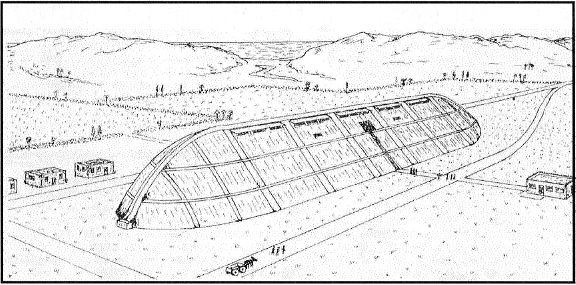
Probable appearance an
size of the ark The function of the pitch presumably was to make the ark water tight. The word “pitch” is Strong’s #3724, Hebrew kopher. Strong’s Concordance defines this word as “properly a cover, that is, (literally) a village (as covered in); (specifically) bitumen (as used for coating), and the henna plant (as used for dyeing); figuratively a redemption-price.” In the King James it is translated bribe, camphire, pitch, ransom, satisfaction, sum of money, village. In eight out of ten instances where the word “ransom” is found in the King James Old Testament, the Hebrew word is kopher. The thought is one of covering. The ransom provides a covering for our sins, as the pitch was applied to the ark to cover the seams and enhance its serviceability. There was another covering of the ark of a different sort. At the end of the flood, “Noah removed the covering of the ark, and looked, and, behold, the face of the ground was dry” (Genesis 8:13). This word is Strong’s #4372, mikseh, “covering.” Perhaps it added some weathering ability to the ark, but it evidently obscured the ark visually. This covering was removed on the first day following the end of the six-hundredth calendar year of Noah’s life (Genesis 8:13). Probably this represents the passage of six periods of time before the redemption in Christ is made apparent to the world during the Millennium, following six thousand years of sin and death. Isaiah uses yet a different word for covering when referring to the same time, the unveiling of God’s redemptive purpose to the world: “And [God] will destroy in this mountain the face of the covering cast over all people, and the veil that is spread over all nations … And it shall be said in that day, Lo, this is our God; we have waited for him, and he will save us: this is the LORD; we have waited for him, we will be glad and rejoice in his salvation” (Isaiah 25:7-9). We see that the six thousand years of sin and death is here represented by six hundred years, the same one-to-ten ratio seen in the perimeter of the ark. Building the Ark The ark would have taken many years to build because it was so large. If the cubits were like the ancient Egyptian cubit of about 20.6 inches, a 300-cubit length would be over five hundred feet. However, it did not take one hundred twenty years to build as some think. Genesis 6:3 does mention one hundred twenty years, but the instructions to make the ark do not appear until verse 14 when Noah’s sons were evidently of adult age. Their births are mentioned in verse 10. In verse 18, along with the instructions for building it, God said the ark would be for the rescue of Noah, his sons, his wife, and his sons’ wives. Since the oldest son was one hundred years at the close of the flood (compare Genesis 5:32 and 8:13), this puts an upper limit of perhaps seventy years on the time remaining to construct the ark. It was probably substantially less. Otherwise wood laid down in the early stages of construction could have decayed from exposure during the lengthy years preceding the flood. Nevertheless, some period of years must have been involved, not just months. Noah would have had the assistance of his three adult sons in building the ark. It is also possible Noah was a wealthy man and used what he had to pay laborers to assist. Such a massive project suggests the combined labors of more than just Noah and his three sons. Certainly whatever currency was used before the flood would have no value when just eight people left the ark at the end of the flood. The meaning of the one hundred twenty years of Genesis 6:3 is unclear. Perhaps it was a pre-warning of the flood, or perhaps it meant that life spans would decrease from their usual 700-to-900-year range of Noah’s day, dropping quickly to a general upper limit of one hundred twenty a few centuries following the flood. Much of the detail about the ark is unspecified, but there had to be a large amount of thought and planning. The various levels had to be strengthened to hold the larger animals. Perhaps the lowest level was for food for the animals, the second level for animals, and the third for the human occupants and a lesser number of animals. All three levels would need access to the light of the single window: “A window shalt thou make to the ark, and in a cubit shalt thou finish it above” (Genesis 6:16). This “window” could have been of substantial length to allow light to reach the length of the interior, and the floors perhaps open in the center to allow the light to reach the lower two floors. This would also aid ventilation. Some thoughtful means of waste disposal to the outside also had to be devised. All of these details were necessary to sustain life for many months at a time. The waters of the flood caused the ark to drift for five months before coming to rest. It was another seventy-four days before the tops of the mountains were seen, and perhaps ninety-five days further to the next new year day when the covering of the ark was removed. The occupants remained for another fifty-six days before disembarking, so that ten days more than one year were consumed altogether. Leaving the Ark When Noah and his family did exit the ark, they constructed an altar to Jehovah and offered some of the precious cargo to him in gratitude for their lives. They “took of every clean beast, and of every clean fowl, and offered burnt offerings on the altar.1 And the LORD smelled a sweet savour; and the LORD said in his heart, I will not again curse the ground any more for man’s sake” (Genesis 8:20,21). Wonderfully, the earth has never since suffered such a flood. The lovely bow which appeared in the sky after the flood, and from time to time ever afterward, is a token from God of his solemn pledge that such a universal disaster will never occur again (Genesis 9:12-15). But this closing scene represents something even more wonderful. At the end of the Millennium, the entire world, having been perfected, can leave the protective shelter of the ark, their covering in Christ, and enter upon a new world. Their impulse will be to praise Jehovah for his wonderful providence, represented by the offerings of Noah and his family to God. And God, for his part, pledges never again to curse the ground, as he did, for example, in Eden at the fall of man: “There shall be no more curse” (Revelation 22:3). The former sin-ridden world will be gone, and in its place there will be a world “wherein dwelleth righteousness” (2 Peter 3:13). 1. Genesis 7:2 says, “Of every clean beast thou shalt take to thee by sevens, the male and his female: and of beasts that are not clean by two, the male and his female.” Evidently this means seven pair and two pair respectively. The two pairs of unclean animals would ensure more than simply one breeding pair to preserve their kind. The seven pairs of clean animals would allow some for sacrifice, and perhaps some for food (Genesis 9:3). |