|
The King Who Had Everything
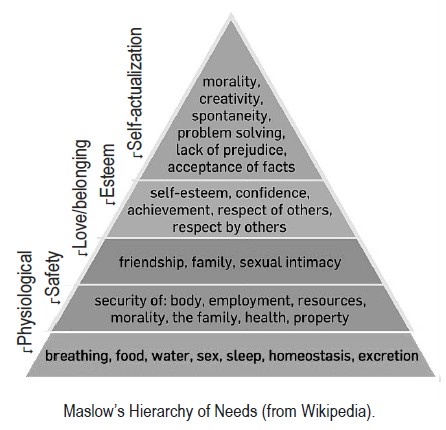
Uzziah Be not wise in your own conceits.—Romans 12:16 Régis Liberda Uzziah’s life provides an interesting insight into human character. It is briefly described in 2 Kings 15:1-7 with other details in 2 Chronicles 26. Most of the kings who ruled Judah and Israel were idolatrous, although a few were not. Uzziah was one of the good kings. (His name is given as Azariah in the book of Kings and Uzziah in Chronicles.) Uzziah was the grandson of Joash, a king of Judah, who began his career at the age of seven when crowned by the priest Jehoiada. Joash reigned as a good king while Jehoiada was alive, but when Jehoiada died, Joash embraced idolatry and even killed Jehoiada’s son Zechariah in the temple. Joash’s son Amaziah was not much better. At the start of his reign he obeyed God, who gave him victory in battle in a miraculous way. Later in life he turned to idols and God abandoned him. Uzziah’s Prosperity Can we explain why King Uzziah was the kind of man he was by looking at the lives of his father and grandfather? Probably not, since we know of good kings, such as Hezekiah, whose fathers were bad kings. A person’s behavior depends partly upon education, but also on character traits, as well as lessons learned from good and bad experiences. Concerning Uzziah we read: “He did that which was right in the sight of the LORD, according to all that his father Amaziah did. And he sought God in the days of Zechariah, who had understanding in the visions of God: and as long as he sought the LORD, God made him to prosper” (2 Chronicles 26:4,5). Unfortunately we know nothing about this Zechariah, who was probably Uzziah’s mentor. Perhaps he was high priest as Jehoiada was for grandfather Joash. If Zechariah could understand the visions of God, he surely was able to give good counsel to the king. The following verses in Chronicles describe a series of triumphant events concerning Uzziah. He was outstanding in everything we associate with a good ruler. He structured his army in a modern way, more adapted to fight against the enemies of Judah. He sent out groups of soldiers instead of one big army of 307,500 soldiers (vs. 13). Groups of soldiers are more likely to gain tactical advantage during battle. Each soldier had a complete set of armor, which shows his kingdom was economically prosperous enough to afford such extensive support for the military. He fortified the cities of Judah, especially Jerusalem where he built two new towers. He encouraged the invention of new engines of war: “He made in Jerusalem engines, invented by cunning men, to be on the towers and upon the bulwarks, to shoot arrows and great stones withal. And his name spread far abroad; for he was marvelously helped, till he was strong” (2 Chronicles 26:15). As result of his preparations, Uzziah was victorious against his enemies and destroyed their fortifications. His fame spread far abroad even to Egypt, and he received gifts from the Ammonites (vs. 8). He was also successful in building his nation’s economy by organizing the two natural sources of wealth at that time: agriculture and livestock. Knowing water was the main problem for everything during summer, “He built towers in the desert and dug many cisterns, for he owned many herds in the lowlands and on the plain. He had workers in the fields and vineyards in the hills and in Carmel, for he loved agriculture” (2 Chronicles 26:10, Net Bible). Uzziah was a great ruler, not just a warlord or strategist. He was open to new ideas and concerned about the well-being of his people. God was with him, which is why he succeeded in everything he did. Uzziah’s Sin After learning of his wonderful accomplishments, it is surprising to read these words: “But when he was strong, his heart was lifted up to his destruction: for he transgressed against the LORD his God, and went into the temple of the LORD to burn incense upon the altar of incense. And Azariah the priest went in after him, and with him fourscore priests of the LORD, that were valiant men: and they withstood Uzziah the king, and said unto him, It appertaineth not unto thee, Uzziah, to burn incense unto the LORD, but to the priests the sons of Aaron, that are consecrated to burn incense: go out of the sanctuary; for thou hast trespassed; neither shall it be for thine honor from the LORD God. Then Uzziah was wroth, and had a censer in his hand to burn incense: and while he was wroth with the priests, the leprosy even rose up in his forehead before the priests in the house of the LORD, from beside the incense altar. And Azariah the chief priest, and all the priests, looked upon him, and, behold, he was leprous in his forehead, and they thrust him out from thence; yea, himself hasted also to go out, because the LORD had smitten him.” (2 Chronicles 26:16-20) The description of Uzziah’s sin is clear, but compare his sin and punishment with some others. Of the thirty-nine kings who reigned over Judah and Israel, only seven were described as having done what is right in God’s eyes. Some “bad” kings reigned a long time and though they were bad, some received no punishment at all! Saul failed to kill all the cattle as instructed by God (1 Samuel 15:9), and consequently was rejected as Israel’s king. David killed Uriah the Hittite (2 Samuel 11:15) and his first son by Uriah’s wife died. Later he numbered Israel (2 Samuel 24) and for that sin seventy thousand died in a plague. Solomon was enticed into idolatry by his wives (1 Kings 11:9-13), and at his death the nation divided into two parts. Then there is Uzziah, who burned incense in the temple and was immediately struck with leprosy. He was not guilty of murder or idolatry. In fact he wanted to honor God, but he did it in an unauthorized way, motivated by the sin of pride. God had his own special class of servants: the tribe of Levi. Priests could only be selected from this tribe to serve God in his temple and only the priests could offer sacrifices and incense. The establishment of a monarchy occurred long after the priesthood was ordained by God. So, although a king of Israel had considerable authority over his people, he was not the intermediary between the people and God. It was the one power a king did not have and Uzziah coveted it. Uzziah’s sin is generally experienced by those who have everything to be happy, but who want still more, perhaps new and forbidden things, so they can feel they really have everything! Maslow’s Hierarchy of Needs
In a seminal paper entitled A Theory of Human Motivation published in 1943, Abraham Maslow proposed that human beings were motivated by needs that could be arranged in a hierarchy. The basic needs were physiological (food, water, sleep) and had to be satisfied before the next level motivated human behavior. That next level was safety (security of body, employment, family, health). The third level Maslow called love/belonging and included the need for friendship and family. After these needs were satisfied, a human being became motivated by needs of esteem, which included not only self-esteem, but respect by others. The highest level of all, a level not necessarily reached by most people, Maslow called self-actualization. That level contains such motivating factors as creativity, spontaneity, problem solving, and the like. One can be quite happy when one has everything one needs for life, including security as well as the love of friends and family. But that may not be enough for others. Happiness may depend upon the need to command the respect of others and to achieve great things. An outstanding manager may decide he needs to write a book. He does not do it because he needs the money. An ex-president may form an international organization to help the world solve difficult problems. In rare instances some decide to do something that is exciting even though it is forbidden. This may give them a sense of power so great they may think they can do what they please with impunity, even though they know it is wrong. Certain powerful political figures have exhibited such behavior and, at least in the United States, it has often meant the end of their political careers. They may not be struck with leprosy, but the effect is almost the same. This appears to be what happened with Uzziah. He had obtained all his success because he was obedient to God. Yet he wanted more. He wanted to be remembered as a great king. He was at the zenith of his reign and had achieved all his goals; no new challenges remained. He knew religious authority was the exclusive domain of the priests, yet he was tempted to do something that would complete his authority as a king. The temptation became even greater when he reminded himself he wanted to do it to honor God, the God he had worshipped all his life, more than the other kings of Israel and Judah. And since the priests were his subjects, they had to obey him. By such rationalization pride and sin rush in. Lessons For Us As we consider Uzziah’s sin, we can easily imagine similar situations concerning ourselves. Uzziah’s sin is not what anyone would call immoral, nor is it what the world calls a crime. It was done by someone who worshipped God, who knew he was receiving bountiful blessings from God, and who held an honorable position because of God. He rationalized that he could do anything if he had the right motivation, but that was not true. A Christian can also be in such a situation, especially if he is near the top level of Maslow’s hierarchy of needs. Such a person enjoys favorable conditions of life, has a good job, a home, belongs to a Christian group, and is recognized by others as a contributor. With no serious difficulties in life, one may find himself in the same situation as Uzziah. The danger is greater for those who have a pre-eminent position within a group, since the temptation to do something exceptional becomes greater the higher position one has. These may develop so much pride that they work in artful ways to dominate others, ultimately refusing even to consider their thoughts and ideas. A more subtle temptation is a strong desire to shine at any cost within a group, to appear as a brilliant speaker, a good singer, a generous donor, or the like. Achieving such a goal may be appreciated by men but never by God who sees the base motive of self-glorification. Some bad kings of Israel and Judah, such as Ahaz and Omri, sinned in ways much more serious than Uzziah. However, the Bible does not say they received any special punishment, other than to be maltreated by their enemies. But in the case of Uzziah, God punished him by humiliating him, even though God had previously blessed him. Now, this once, Uzziah suddenly sinned. Was this punishment fair? Yes, it was because this king knew better. He had been living close to God. Here is another lesson for us. We are not kings, but we do know God. We know about his love and precious plan to redeem the entire world of mankind. We do not have to achieve anything great. We have only to do God’s will during our relatively short lifetimes. Let us devote all our energy to not promoting our name in the sight of men or history, but to please our heavenly Father, who will see not only our zeal, but our humility as well: “Be clothed with humility: for God resisteth the proud, and giveth grace to the humble” (1 Peter 5:5). Developing humility is a good way to avoid committing Uzziah’s sin. |