|
End-Work Beginning
The
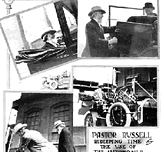
Harvest “The harvest is the end of the age” (Matthew 13:39, Diaglott). Robert Goodman In the early church, the gospel was spread by word of mouth. Its powerful message caused thousands to believe in the redemptive power of Christ. Later, the letters of the New Testament were passed among the early churches. These letters provided a consistent message accurately preserving the word down to our day. During the early church there was a great number of believers. The rapid spread of the true gospel subsided as the church faced the stress of shifting doctrines and the rising power of Papacy. However, even during the “Dark Ages” a continuous thread of true believers existed. These individuals nurtured the seeds of the truth and kept it alive. Trends During the Harvest Church “Daniel, shut up the words, and seal the book, even to the time of the end: many shall run to and fro, and knowledge shall be increased” (Daniel 12:4). The time of the end includes the harvest. This period is characterized by the major advancements in knowledge, communication and transportation that we have witnessed in our day. In the beginning of the harvest, there were a number of significant advancements that revolutionized transportation and knowledge. In 1873, Remington made the first commercial typewriter with a QWERTY keyboard. This greatly increased the speed of recording the written word. The telephone was patented in 1876 and opened the way for modern voice com- munications. In 1877, the phonograph provided the first mechanism to record and store sounds. In 1878, Thomas Edison patented the first practical light bulb. The first commercial model of the gasoline engine was sold in 1881. Because of the light weight of the engine and high energy density of its fuel, it opened new possibilities for transportation. The gas-powered automobile was patented in 1886 and provided the beginning of the personal transportation revolution. In 1883, the cash register was patented. It was the first generation of the computing machines that fill our world today. In 1886, the commercial linotype machine provided the ability to typeset by creating whole lines of print at a time. Prior to this invention, no newspaper had over eight pages. In 1896, Edison developed the first silent black and white motion picture system. The introduction of the wireless telegraph in 1896 revolutionized the spread of news across the United States. Pastor Russell Redeems the Time Pastor Russell was an innovator who fully utilized the technologies of his day to spread the truth throughout the world. This New Beginning provided a bounty of harvest truth that would not have been possible without the use of these innovations. Pastor Russell also employed the marketing, management, and advertising skills he learned in his haberdashery business to spread the truth throughout the world. Through his efforts there was a great resurgence in Bible study and a surge in the number of people who consecrated their lives to God.
Pastor Russell traveled
more than one million miles in the harvest work. This was a phenomenal amount of
travel for his day since he was limited to land and sea travel. He used modern
transportation to spread the word of truth to six continents. Pastor Russell
used every form of transportation available. He exercised the words of
Colossians 4:5, “Walk in wisdom toward them that are without, redeeming the
time.” Harvest period transportation made it possible for him to travel over
fifty-thousand miles a year. His extensive travels and world tours were
documented in his journal, The Watch Tower.
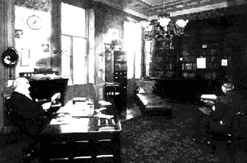
Pastor Russell made use of the other advancements of his day to spread the harvest message. He wrote more than fifty thousand book pages during his life. This would not have been possible without the use of the typewriter, the linotype, and the communication advancements that allowed him to remain productive even during his travels. This is evidenced by the body of writing he left for the harvest church. At one point, the Pastor was published weekly in about four thousand publications, mostly newspapers, which reached a world-wide audience of fifteen to twenty million people. His colporteurs sold books door-to-door and delivered tracts to people’s homes. Pastor Russell developed training programs that made the colporteurs more effective in spreading the truth. This not only bolstered the spread of the word but also financed dissemination of the harvest message.
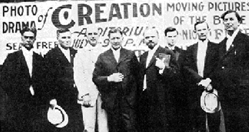
One of the biggest
technology ventures used for spreading the harvest message was the Photo
Drama of Creation. It took over two years and thousands of man-hours to
produce. It was a state of the art production in its day. The Photo Drama
included moving pictures, hand-painted color slides, recorded audio and live
music. Free showings of the Photo Drama brought in crowds in the
thousands around the globe. The Photo Drama helped disseminate the word
of truth widely, and was shown for years.
The truth movement during the early harvest years yielded a great number of believers who dedicated their lives to God. Some consider Pastor Russell the best known and most widely published minister of his day. After the Pastor’s death, the harvest bounty began to wane. The Church’s Mission to Reap the Harvest Jesus said, “The harvest truly is plenteous, but the labourers are few; pray ye therefore the Lord of the harvest, that he will send forth labourers into his harvest” (Matthew 9:37,38). As expected at the end of the harvest, the number of workers has tapered off. Yet we read: “This gospel of the kingdom shall be preached in all the world for a witness unto all nations; and then shall the end come” (Matthew 24:14). The gospel message must continue to go out until it reaches every corner of the world. This is one of the directives for the harvest church at the end of the age. Despite the fact that the workers are few, the harvest workers still have the responsibility and privilege of proclaiming “the gospel of the kingdom.” The Pastor exploited the technologies of his day to spread the word and we should do the same. So what should the church be doing at the end of the harvest? Our Scriptural goals are to sanctify ourselves, to support the spiritual needs of the brethren and to spread the gospel witness throughout the world. To accomplish these goals we should continue to (1) pray for guidance, (2) utilize technology, (3) make use of a distributed workforce, and (4) translate and spread the gospel into multiple languages. All of these goals are attainable in today’s world. Exploiting technology to meet these goals does not change the importance of traditional witness methods, but instead complements them. For instance, we should continue to print and distribute tracts. However, these tracts should also be available from the Web where they can be searched, printed, downloaded, or ordered by mail. Providing options improves overall witness effectiveness. So the question is: “What are harvest workers doing today to disseminate the gospel of the kingdom?” Witness Efforts at the End of the Harvest Responses to witness efforts in Europe and America are declining, while responses in developing countries continue to grow. Truth materials are being translated into the languages of South America, Africa, and East Asia where interest in the truth is often keen. Modern translation programs are opening the way for the message to reach entirely new audiences. The printed word continues to flourish. Workers in the vineyard continue to publish witness, reference, and devotional materials. We are seeing a transition into color print with graphics. These documents are appealing to the eye and attract the interest of the people. Many harvest workers have produced their own tracts in response to current events. The migration to electronic printing has greatly simplified the printing process and makes “just in time,” custom and small runs practical. Electronic printing is highly automated and requires a smaller workforce. There are numerous harvest magazines and newsletters. They run the gamut from basic witness to topical study and scholarly treatise. Translation into multiple languages is critical to the spread of the word. There are translation programs which can quickly create a rough draft in other languages. During Pastor Russell’s day, truth materials were translated into more than a dozen different languages. Today, we have many more translations. These translations are being used for print, audio and video materials. There are websites that have translations of the Studies in the Scriptures and the “Chart of the Ages” in dozens of different languages (see www.thestudiesinthescriptures. com).
The Bible Student Resource Center is a color eReader or tablet. These devices support audio, pictures, graphics, video and eBooks. They can connect to the Internet to browse or download materials. Since they are electronic book readers, the expansive portfolio of Bible Student materials that were formerly available only on computers are now available on these devices. They are moderately priced, light weight, portable, self-organizing and self-contained. The Bible Student Resource Center is equivalent to a printed library with hundreds of books, CDs, pictures and DVDs and they are simple enough to be operated by almost anyone (www.biblestudentproductions.com). The combination of personal computers and the Internet has opened up new harvest opportunities which never existed before. Not only are there searchable Bibles and resource books, but the full complement of harvest truth materials is available to brethren and the public world-wide. Students of the Bible can explore the Scriptures in ways that were never before possible. Teleconferencing is a popular way to conduct meetings with people in multiple locations. On a weekly basis there are Bible studies, talks and other activities conducted over the phone. Video conferencing continues to grow and includes transmission of conventions and studies. It is a particular blessing for study and fellowship with isolated brethren. The Internet and email have opened collaboration and witness opportunities never before possible. There are numerous harvest websites that target all sorts of audiences. Chat rooms provide opportunities for personal interaction. Modern search engines provide the ability to quickly find harvest truth materials and make these materials available to the public world-wide. Websites provide materials which can be downloaded and printed or just viewed on the computer, laptop, tablet, or eReader screen. Many harvest truth websites have links to other sites so that traffic can flow between them. Email lists are available to bring the brethren from around the country and world together. Radio plays an important part in the harvest witness work. There are several witness radio programs that are played on stations around the world. Talk radio is another witness outreach that reaches a contemporary market segment. Internet radio stations allow people to hear the harvest truth message twenty four hours a day world-wide. Harvest videos have been used for public witness efforts and on television stations. Televised preaching of the harvest gospel has been especially fruitful in cultivating new interest. Harvest Witness Opportunities on the Horizon We should expect that harvest workers will continue to exploit both traditional and new ways of spreading the gospel message. On the horizon we will likely have virtual 3-D tours of the tabernacle, temple, pyramid, and the Chart of the Ages. There has been extensive conversion of discourses and other audio materials into digital formats. This has opened the way for Bible Student websites where material can be searched and downloaded. Brethren are transitioning into adding videos onto many of these resource sites. We will also see more and more support materials like Bible studies available on the Internet to support ecclesias. There should be more witness activity on YouTube and other public video sites. Harvest workers are already beginning to adapt material for those media. We are currently seeing a growing interest in the area of harvest videos. Today, there are more than one hundred PowerPoint discourses and witness videos available. These instructional and witness videos have been used to instruct the young, conduct studies, teach doctrine, supplement regular discourses, build ecclesia video libraries, do video tracting and are available for use by isolated brethren. They can be downloaded from the Web for viewing on smart phones, eReaders, tablets and computers. These videos are available on DVD and on the Web and can be viewed on devices from high definition TVs to phones and iPods. There will be new witness opportunities as more and more people obtain smart phones. These may be a major avenue for witnessing to both young people and those in the developing world. Social media is an area that the harvest workers are just beginning to explore. Although the use of chat rooms has been around for a while, we should see the witness efforts to spread the gospel message expanded to social networking sites like Facebook and Twitter. Teleconferencing and video conferencing will continue to grow as this technology is adopted around the world. In Hebrews we read: “Not forsaking the assembling of ourselves together, as the manner of some is; but exhorting one another: and so much the more, as ye see the day approaching” (Hebrews 10:25). Although this Scripture directs us to meet with the brethren as often as feasible, remote conferencing opens the opportunity to attend studies and conventions in far-away cities and countries that would not otherwise be possible unless we traveled there. At one recent convention with about 150 brethren in attendance, there were 47 video connections. These included the isolated, the infirm and those outside the area that would otherwise be unable to attend. We should strongly encourage meeting face to face. But when that is not possible, virtual meetings can be a wonderful blessing. In Conclusion The harvest truth gospel continues to spread throughout the world. By using both traditional methods and utilizing new technology and opportunities, the workers in the vineyard can continue and even expand the preaching of the gospel throughout the world. Though the time is short and the workers are few, the message is still glorious and the world needs its hope and comfort of a better day. May the Lord’s will be done in all of our efforts to proclaim the gospel of the kingdom. We thank the Lord for having the privilege and opportunity to work in his vineyard at the end of the harvest. |