|
Today In Prophecy
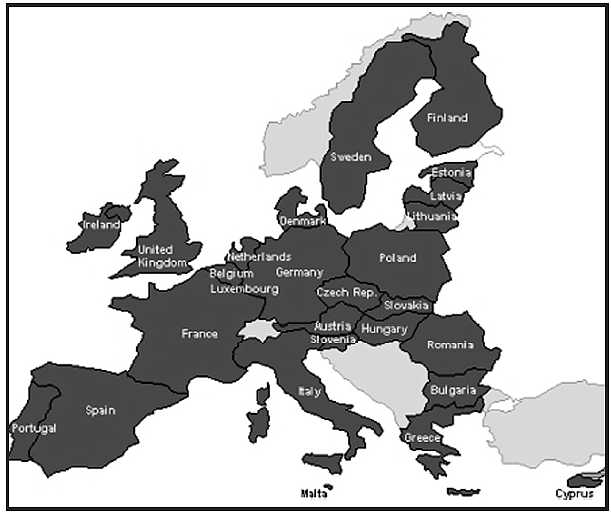
Trouble in Europe “Men’s hearts failing them for fear, and for looking after those things which are coming on the earth: for the powers of heaven shall be shaken” (Luke 21:26). "There is no magic bullet that will solve this crisis and no single move that will suddenly erase the sovereign debt woes. In a best-case scenario, we’ll still be talking about these issues for years to come.” This July, 2012, quote from Morningstar, an independent investment research firm, summarizes the situation facing the European Union (EU). Prof. Brigid Laffan of the University College of Dublin proclaimed this “the deepest crisis in the history of European integration. It is a systemic crisis of the euro area and if the euro area cannot be maintained or implodes, it will also prove systemic for the EU as a whole.” Over 70 percent of those responding to a Euro- barometer survey expressed no optimism that the current crisis could be solved within the next two years. Minister of State for European Affairs Lucinda Creighton said that, though an ambitious redesign of the European Union is needed to secure the future, with the EU, the “massacre and economic obliteration of the first World War and second World War was left behind.” History of European Unity
Following World War II’s devastation of Europe, the strongest surviving countries began a series of cooperative events that were meant to secure lasting peace and economic prosperity. • 1950s — economically and politically. However, the cold war between east and west deters efforts. • 1957 — The Treaty of Rome creates the European Economic Community (EEC), widely known as the Common Market. • 1960s — Common Market countries, now known as the European Union, eliminate duties on mutual sales. They agree to joint control over food production to provide ample food for all. Soon there is even surplus agricultural produce. • 1973 — Denmark, Ireland and the United Kingdom join the European Union, raising the number of member states to nine. The Israeli- Arab Yom Kippur war in October 1973 results in a European energy crisis and economic decline. • 1974-1975 — The last right-wing dictatorships in Europe come to an end with the overthrow of the Salazar regime in Portugal and the death of General Franco of Spain. The EU starts to transfer huge sums between countries to create jobs and infrastructure in poorer areas. • 1979 — The European Parliament increases its influence in EU affairs and all citizens can, for the first time, elect their members directly. • 1981 — Greece becomes the 10th member of the EU, followed by Spain and Portugal five years later. Ironically, these countries eventually become a major region for the current crisis. • 1986 — The Single European Act is signed. It provides a basis for transition to a single free-trade market. However, the fall of the Berlin Wall in 1989 prevents implementation as political upheaval in Germany occurs when East and West Germany are united after 28 years of separation. • 1993 — The movement of goods, services, people and money gives rise to the creation of a single currency, the Euro. Two treaties solidify the Union: the “Maastricht” Treaty on European Union in 1993 and the Treaty of Amsterdam in 1999. • 2004-2007 — Political divisions between east and west Europe are declared healed when no fewer than 12 new countries join the EU. Despite its gain in economic solidarity, Europe today has been unable to build political cohesion. This turns relatively minor problems into disproportionately large struggles when trying to prevent financial meltdowns. Convergence is difficult because there is no universal way of life nor language amongst the member countries as there is in other leading economies such as the United States and China. European nations remain apart, as they have for centuries, each with their own language and culture. A More Prosperous World? Although the current economic world is far from falling apart, the scriptures tell us to expect continued crises. “They do not know nor do they understand; they walk about in darkness; all the foundations of the earth are shaken” (Psalm 82:5, NASB). The final state of the European Union is yet to be written. Alan Greenspan, former Chairman of the United States Federal Reserve Bank, summed it up this way: “Clearly, we do live in a global world and we (all) will be impacted in a more general way eventually.” When the Euro appeared, these predictions were widely made: • Euroland’s capital markets will grow exponentially in coming years as the removal of cross-border currency risk drives pan-European markets; • The euro will stand alongside the U.S. dollar as the second-most important currency in the world, reflecting its coming role in global trade and finance as well as its common usage by 290 million Euroland citizens. Today, in the midst of potentially destabilizing imbalances among world economies, the new Europe may produce results contrary to those so widely expected in 1999. The Bible foresees this effort in terms of gathering the nations in preparation for Armageddon: “Therefore wait for me declares the LORD. For the day when I rise up to the prey. Indeed, my decision is to gather nations, to assemble kingdoms, to pour out on them my indignation, all my burning anger; for all the earth will be devoured by the fire of my zeal” (Zephaniah 3:8, NASB). The world dominated by nation-state “super-powers” is past. Attempts to eliminate the ups and downs of history by uniting together have only made the world more unpredictable. Jesus said “And there shall be signs upon the earth, distress of nations, with perplexity” (Luke 21:25). The Greek word for perplexity means “no way out, to be at a loss.” Elsewhere, Jesus said, “No man putteth a piece of new cloth unto an old garment, for that which is put in to fill it up taketh from the garment, and the rent is made worse” (Matthew 9:16). Every economic system and system of government has been unable to secure permanent peace and prosperity. Our day is experiencing another such attempt. Today’s systems — social organizations, religions, economic and political structures — will soon be replaced for the benefit of all people “Thou art weighed in the balances, and art found wanting” (Daniel 5:27). The final battle of Armageddon will dissolve the power of all such systems. Jesus’ presence will then lead man into his kingdom. “I will shake all nations, and the desire of all nations shall come, and I will fill this house with glory, says the LORD of hosts” (Haggai 2:7). God shakes nations in preparation for His Kingdom. Under the divine standard, everyone on earth will enjoy peace, equality and an opportunity for everlasting life. Let our spiritual awareness overrule any fear or concern we have as we look at the world today. Let us remember the encouragement of the Psalms: “All the ends of the earth will remember and turn to the LORD, And all the families of the nations will worship before Thee. For the kingdom is the LORD’s and He rules over the nations” (Psalms 22:27, 28, NASB). |