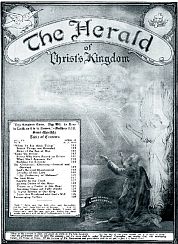
VOL. XVI May 1, 1933 No. 5 Where
He Leads Me I will Follow The
Lord will dive Strength to His People Half
Hour Meditations on Romans Made
Partakers of His Holiness A
Further Word Regarding Pilgrim Visit's The
Institute's Annual Meeting VOL. XVI May 1, 1933 No. 5 Where He Leads Me I will Follow"Return unto thy rest, O my soul: for the Lord hath dealt TO BE always hopeful and courageous in depressing circumstances is not an easy thing. The discipline of life seems often very hard; and we rebel against it, not because of its hardness alone, but because much of it seems so unnecessary. Sometimes it is the pettiness of our ordinary life that weighs us down: and sometimes it is the disappointing ineffectiveness of our efforts to serve God worthily. Our ordinary concerns look so poor and mean that we long to be free from them, so as to spend life in a nobler way; but we cannot get free; we are chained to the drudgery; we cannot rise. "This endless struggle just to live," we say, "this weary round of uncongenial work day after day, this endless buying and selling, this ceaseless toil of mere housekeeping, this narrowing down of my thoughts to the petty details of food and clothing; this irksome monotony of life where I have the same small things to attend to day after day, all the year through, unable to get above them or devote my energies to loftier things-why does God tie me down to a life like this? Why does He not give me work to do in which I could better serve Him, and at the same time better satisfy my own idea of what a noble life ought to be?" If We Only Understood If we take such questionings to God in the still hour of meditation and prayer, however, we shall get His answer to them clear enough, just as He gave it to Israel by Moses long ago. He will tell us that what we call the drudgery of our common days is meant to do two great things that are absolutely indispensable, first "to humble us," and next "to prove us, and to see whether we will keep His commandments or no." It needs not only Divine teaching, but Divine discipline in addition to the teaching, to make us content with faithfulness in very lowly things, instead of complaining that we have not greater things to do. We are eager to do great things. Our pride and self-complacency are flattered by our having large services demanded of us. And God understands us well, and therefore seeks to purge us of this pride by giving us only common and humble things to do, that ostentation may not tempt the heart. But the discipline is also meant "to prove us" whether we will keep His commandments or no; to see whether we are seeking simply to do His will, and are not pursuing our own. There is hardly one man in a thousand who sets himself steadily and humbly just to do the will of God with no ulterior aims whatsoever. If we all did that, there would not be a single unhappy heart in the world! In our impassioned longings for some other kinds of life than what is God's present will concerning us we are living in the region of dreams; and men are not sanctified by dreams, but by battles. When that old people of Israel listening to God at the fiery mount had a bright vision of the great and noble life they would enter on ere long, they thrilled with devotion to Him, and vowed perfect obedience to His will in everything. But how long was it till they were bitterly complaining of the tiresome and poor monotony of those wanderings in the desert by which the vision was to be realized? And where are our vows of obedience too? Where are our professions of living only according to His will? To have bright visions of what a noble thing life might be made to be is not to make it so. But all the time we are looking at our dream-pictures, God is taking a better way with us, though we see not what His meaning is-training us to humble faithfulness by the seeming drudgery of commonplace duties in an uncongenial sphere: and He shows us this as soon as we get alone with Him. Many Occasions for Discouragement There is another and a keener discouragement, too, over which nothing can lift us so easily and so completely as a quiet talk with God-the discouragement arising not from the pettiness of our lives, but from our disappointing ineffectiveness and want of success in working for God's righteousness in the world. The discouragement grows often into despair, and we cry, "Oh that f had wings like a dove, then would I fly away and be at rest!" That was the cry of a thoroughly dispirited man, yet not a worldly man, nor a man simply saddened by accumulating sorrows; rather, a man weary with the vain struggle against the opposing forces of evil, a man striving to fight against the sin around him, and to put down iniquity, yet finding his efforts thwarted on every hand, and almost giving up the battle in despair, saying bitterly, "I have spent my strength for nought and in vain. Can God mean that His work shall be only pain to me and defeat? Has he nothing better to give me than this?" There are many such hearts in the world today; earnest Christian hearts, zealous for God, yet saddened by the feeling that all their efforts are in vain; not world-weary, nor sin-weary, nor sorrow-weary, but battle-weary; looking at the difficulties on every side, thinking of their own weakness to stem the rushing tide of evil, and looking forward to the long-drawn fight that is before them still, till their courage fails, and they shrink from the depressing prospect of useless battle to the very last. For it is not the sharpness of the conflict, but the weary length of it, that often makes the heart give way. It is the neverendingness of the fight, the hopelessness of anticipating any triumphant close, that makes so many who are really soldiers of the King cry, "Oh that I had wings like a dove, to fly away and be at rest!" Let Us Consider Him Who Endured But now let this depression be not nursed in the brooding mind, but taken into the secret place of communion with God, and how soon a different complexion is put upon the circumstances that cause it! What has He to say about it? What is His answer to the weary sigh? It is just to think of Christ. Who had ever so sore a fight as He, or more discouragements than He? Whoever kept up the fight to the very last as He? It was said of Him before He came, "He shall not fail nor be discouraged till He have set judgment in the earth," and He will yet fulfill the prophecy. He has been waiting for His victory for nineteen hundred years, and is waiting' for it yet, but waiting undiscouraged as well as undismayed, "expecting till His enemies be made His footstool." The unfailing and unfainting hopefulness of Jesus Christ may shame us out of our discouragement while following Him as "fellow-workers with Him unto the Kingdom of God." The one answer to all our despondency is Christ. If He had spoken as we so often speak, and felt as we so often feel; if He, seeing how small His success was, had folded His weary hands and given up the conflict, what then? And what was His review of His life when almost done? "I have glorified Thee upon the earth, I have finished the work Thou gayest Me to do." That was all, but that was enough. Can any of us wish to be able to say more? "Oh for wings," we cry, "to fly away and be at rest!" But if Christ had said that, where would our redemption have been? Wings await us only as they awaited Him-only when, like Him, we have finished the work given us to do, and have fought out the battle to the end. Armor now; wings, if we are patient, we shall find in due time. Lights and Shadows Heights and Depths of the Christian Life Yet, even meanwhile, the blessing of "wings" is not always denied; not wings with which to escape all troubles, but wings with which to rise above them. "They that wait upon the Lord shall mount up on wings as eagles; they shall run and not be weary, they shall walk and not faint." That is not a promise for the far-distant future. It is a promise for the present; and each part of it will be at one time or another, fulfilled to the "waiting" heart. There will be soaring days, when we get so high above the world that we can feel as if we had parted company for ever with its sorrows and its temptations, when we can not only outrun the vexations of life, but outfly them, and feel as if they did not exist. God means us sometimes to have hours like these; but they are not the ordinary experience even of the best of men. The ordinary experience is a lower, and yet equally comforting one-the fulfillment of the other part of the promise, "They shall run and not be weary; they shall walk and not faint." Not so ecstatic an experience as the soaring, but quite as useful and possibly more safe, is this humbler experience given to those who know that they have no might in themselves, and wait for God's might to strengthen them. And the order of these three promises is to be noted well, for they are often fulfilled to us just in that order and no other. It may seem strange that the loftiest attainment should be put first and the lower last; but this order is the true one for all that. The soaring days of every Christian generally come at an early stage. At the wonderful time of his "first love," his first experience of the riches of Divine grace, his conversion days, he often rises wonderfully high above the world. Never, indeed, does he feel so completely loosed from its thrall, never does he rise to such a height both of joy and of surrender; his glowing feelings seem then to carry him up to the very gates of heaven. But soon he has to come down from his ecstasies because God calls him to battle and service below, and then he learns to be thankful if only he can "run with patience the race set before him." When We are Alone with God And later still he is humbler still. A larger experience .of the world and of himself shows him that constant "'running" even is a thing he cannot keep up. He is thankful then if he can but "walk" with God, leaning upon His everlasting arms, till he comes to the dark valley at the end of the pilgrim way, and finds that there is no soaring over it, nor running through it. He is glad of the Lord's staff to keep him from falling, and will only say, "Yea, though I walk through the valley of the shadow of death I will fear no evil." But as he goes leaning on God, he finds that God's strength gives him the victory as completely as when he was able to soar. Now, the manifold discouragements of life are sure to oppress us terribly so long as we are merely alone with ourselves, brooding over them; but they will quickly disappear when we are alone with God; for then we look upon them with His eyes, weigh them in His balances, measure them by His tests; and as we review them in ' His light, there comes into us a great hope, a great courage, and a great peace.-Selected. The Lord will give Strength to His People"These things have I spoken unto you, that My joy might remain in you, and that your joy might be full. . . Verily, verily, I say unto you, that ye shall weep and lament, but the world shall rejoice: and ye shall be sorrowful, but your sorrow shall be turned into joy." - John 15:11; 16:20. HOW grateful the saints of God may well be for the preservation of so much of this last message of Jesus. It comes to us as a discourse, spoken in that solemn hour preceding His betrayal, and may very properly be called His farewell sermon. As we of today read this particularly intimate and tender message passed on to us, let us lose sight of the long intervening centuries and just imagine ourselves blessedly associated with our Lord and His immediate disciples, listening to His gracious words of comfort, drinking in all we can grasp of the encouragement they impart, and realizing something of the spirit and life His wonderful words contain. If the occasion was a precious one to those early disciples, how much more precious should it be to us today, since the Holy Spirit has come to take of the things of Jesus and reveal them unto us. What depths of meaning are uncovered to us that were yet unknown to even the beloved John, leaning on His breast in that upper room, for the Spirit was nor yet given. As a part of "all Scripture given by inspiration of God," this message has surely contributed much to our joy and happiness. As we ponder it over we have no difficulty in understanding why Jesus should say that He had spoken in this way to the end that our joy might be full. Our very heart-hunger, and our eager longings for a sense of His nearness, has been so marvelously anticipated by Him in "these things," that we need never ask why they were necessary to make our joy complete. And as we grow in our ability to assimilate these blessed words, how definite and real are the influences they exert over us in our hours of sunshine or shadow. Who that has known the deep transporting joy that steals into the heart when faith fully appropriates these words as a personal message, can ever doubt His power to fill the soul with the blessings of joy and peace He promised us as He went away. And such are they who do know in an experimental way, the permanence, as well as the fulness of the joy these promises make sure to us. When Jesus promises to send a full measure of joy that will "remain" in us, and then reinforces that pledge with the further assurance that "Your joy no man taketh from you," what more can He say? Surely in view of such immutable promises, as believers in His word, we should most certainly be telling of our actual state of mind, when in the house of God we join with others to sing, "My life flows on in endless song, above earth's lamentation"; and our greatest desire will be, not to relate foreboding fears of what may come to darken our sky, but to testify to "what the Lord has done for me." What a storehouse of comfort and consolation to the entire Church chapters 14 to 17 of John's Gospel record has been. To the faithful followers of Jesus, walking as He walked in this evil world, there has come a painfully literal fulfillment of His warning that all who would faithfully abide in 'Him should suffer as He did. All the true saints have known the bitterness of this foretold persecution in one form or another; and this being true as pertaining to the sorrows, it could not be otherwise in regard to the promised peace and joy. These blessings and adversities have gone hand in hand in every period of Church history. No one living godly in Christ Jesus has found the way to life a flowery bed of ease. Dark ages may give place to greater religious freedom, and the light may shine with greater brilliancy on the path of succeeding generations, but a malignant Adversary will never cease to hate and buffet the saints of God. But no patient, willing sufferer has been denied the inheritance of sustaining consolations, which are just as definitely foretold as the sorrows. All have riot suffered alike. To some the suffering has come with great severity, and placed them in the forefront among the martyred witnesses. To many others the halo of the martyr may never be possible, yet all have as truly shared in the sufferings of Christ, and will as surely share in the glory to follow. The most obscure and isolated saint has had abundant opportunity to know that "ten thousand foes arise" to tempt and afflict the righteous, and therefore no true child of God is shut out from the number of those to whom these chapters belong. Jesus here speaks to all His brethren, desiring that all who love Him may know that He counts them all sharers with Him in His trials, and therefore all may expect to have His joy also-yes, and experience it, not intermittently, but as remaining in them, full and permanent. Take Heed How Ye Hear It is important, however, that we observe the conditions under which these gracious words should be received if they are to produce this joy and peace in us. How apparent it is, and how solemn the thought, that one might even sit in the personal presence of Jesus, and hear these promises flow from His lips; and at the same time have the heart so preoccupied with his own ideas of how this heritage of peace and joy could best be secured, that he would miss much of 'the depth and significance of Jesus' words. To experience the full inspiration of what He meant when He reiterated the consolations contained in our opening texts, it will be absolutely necessary that we listen with undivided attention to all He has to tell us, for we are taught that our joy is conditioned on obedience to all His commands, and on our active delight in all His precepts. A very careful search must be made to make sure that no unworthy or selfish ambition, no distracting objectives, are permitted to dull our hearing or becloud our understanding of how His joy may come in and abide. Repeatedly He tells us that His Word must abide in us, that the Holy Spirit must be given free course in the daily life, and that our response to God's will must be similar to' His own unadulterated delight therein, if we would know His joy. Like every other treasure worth while seeking for, this inheritance left within reach of our possible attainment by Divine love, can be experimentally known only by such as are willing to seek until they find. And just here it may be helpful to pause and observe the reactions of our Lord's, immediate disciples during the course of this marvelous sermon. It may be that by doing so we will see ourselves as He must so often see us. As with these disciples, so it may frequently have been with us, the most profound and important features of His Word seem to receive the most casual and meagre attention, while we, as they did, seize with eagerness on some statement of less importance and, making much of that, reveal our too occupied condition of mind to catch the deeper and more vitally important words He wants us to heed. On this memorable occasion Jesus would engage the attention of His disciples with the matter of their amazing oneness with Him in the Father's purposes, a theme on which He so loved to dwell. His great desire is to encourage them by telling of the peace they may definitely know henceforth, a peace so important that it is given special mention in this legacy His love seeks to write upon their hearts. He has told much of the coming Comforter and the wonderful results of its dwelling within them. He draws valuable lessons from the vine and its branches, and uses this to make plain the relationship of Father, Son, and Church, in a unity most sublime and glorious for time and eternity. And through all of this they seem to have listened in silence. But when their ears catch His statement; "A little while and ye shall not see Me, and again, a little while and ye shall see Me, they are all alert and full of inquiry. "What is this that He saith unto us, A little while, and ye shall not see Me; and again, a little while, and ye shall see Me: . . . we cannot tell what He saith." (Chap. 16:17, 18.) Apparently the profounder truths provoked little comment or discussion amongst these dear disciples, but just as soon as Jesus touches that which immediately concerned them, they are full of interest and ready to interrupt Him to discuss this "little while." And is it not so even yet? Have we not seen much more attention given to the comparatively less essential features of truth-"the outskirts of His way," than to the great facts of oneness with Christ, Spirit-infilling, cleansing from all filthiness of the flesh and spirit, and the life that is truly hid with Christ in God. Spiritual leaders in every other period of the Church's history have lamented the fact that this lesser interest in the perfection doctrines of the Word characterized their day. Is it any different today? Oh how imperative it is that we who profess discipleship today give special attention to all the Master's words. If His words must necessarily abide in us in order that both warnings and promises may be effective, we will surely need to take the most careful heed how we hear. Sorrow Without-Peace Within The fact that so many seem to experience difficulty in harmonizing the sorrowful aspect of successive trials, with a realization of this permanent joy and peace promised by Jesus, surely reveals the need for our giving this special attention to all "these things" spoken by Him. To such as have ears that seem open particularly to the facts of a coming Kingdom and its joys, but closed to many of His profound statements respecting present possibilities, many of His gracious words will very likely continue familiar enough as statements, but be lamentably ineffective in turning life's actual experiences from sorrow to joy, and outward storms to inward peace. We cannot come to this last discourse of Jesus and pick and choose, if we would know the blessings He desires that all His words shall impart to us. Has He spoken to us of a full cup of joy? Yes indeed! but also of a cup of sorrow just as real, and frequently seeming just as full. Has He promised us peace beyond the power of the world to give or take away? Surely so! but He also tells of tribulations sufficiently severe at times to cause us to "weep and lament"-apparently contradictory statements; though not really so when all He said is kept in mind. He would just have us learn that all of "these things," without exception, have been purposely mentioned, to the end that His joy and peace might be ours to the full. Looking Back We will Praise the Way With the gathering clouds of trouble now settling 'down upon the world and the Church, happy indeed are they who have learned how real are the riches of grace and glory hidden in the ministry of sorrow. Can any Christian really claim to know "the joy of the Lord" until he has learned that it is possible to "count it all joy when ye fall into divers temptations. The question is a proper one for the reason that true consecration to the will of God, is not chiefly submission, but rather a delightful acquiescence in that will. No one assuming a "grin and bear it" attitude should deceive himself into believing that he is in line for these blessings Jesus is promising us; for the peace and joy He experienced were possible solely because He could say, "I delight to do Thy will, 0 My God." Therefore a mind unable to rise above the present season of "heaviness through manifold temptations," and thus unable to really look on the things not seen, eternal in the heavens, can never know the joys which God has ordained can be known only by those who purchase them by sorrows peculiar to the narrow way to glory, honor, and immortality. Take from the hand of Jesus the cup the Father had poured for Him, and we rob Him of a joy He considered of priceless value, rob Him also of the joys set before Him, as well as of the joy and delight He had in suffering for us. Ah, yes, it was not the nails in His dear hands and feet that held Him to that cruel cross of suffering. Had it been naught but material nails that held Him there, He must surely have come down to answer the taunts of His enemies. And it, was not merely submission that bound Him hand and foot. He was held to that "old rugged cross" by a love for the will of God, and by a love for us, that was no "grin and bear it" thread, but a cord, a thousand times more constraining than wood and nails. And must this be our attitude also if we are to experience His joy to the full? Surely so, for this alone is the way thereto. If we could only remember at all times the certainty of the promise that all things work together for our good, how much more precious some of our trials would seem to us even now. Does some cross seem suddenly laid upon us and the reason why, difficult to understand? Oh, what future joy and happiness that very trial may make possible. When Simon of Cyrene left his country home one fine April morning, he was a very obscure and unknown man; but when the cross of Jesus was so suddenly laid upon his shoulders, his patent to nobility and undying honor was secured, and "wide as the world, and lasting as the ages, is the fame of the man who bore the Savior's cross." Will it be otherwise, dear cross-bearing saint, with you, if you take up the cross laid on you, when you can truthfully say, "Gladly will I toil and suffer, Only let me walk with Thee." Let those who will, conclude that "these things" spoken by Jesus were largely idealistic, and therefore rarely to be expected in actual life, but while true believers remain in the earth, there will be some who• can testify to knowing such joy and peace. Where the conditions are complied with, as truly as He said it, so surely will we realize it "In Me ye shall have peace." When faith is active and we let our knowledge of God's constant supervision harmonize all our experiences of weal and woe, how comforted and strengthened, yes, how happy we may be. Nothing should daunt those who really believe that
We are expressing no meaningless mitigation when we say, "Looking back we'll praise the way" over which Divine Love has led us day by day. We know we will be overwhelmed with gratitude when "God unrolls the canvas and explains the reason why" for every trial. But does Jesus want us to wait until in that glory realm everything is explained, before we can have fulness of joy? No indeed! He is saying these very things to make us full of joy now. He wants us to be looking forward as He was and experiencing a corresponding present joy, even though, because of the sorrows promised, we are passing through a vale of tears. This is our present inheritance in the darkening shadows settling down all around us. How fully, dear brethren, are we realizing these things, these fruits of a believing, appropriating faith? Surely we are happy, for it is morning, and deliverance draweth nigh. "Then let our songs abound and every tear be dry." Was Our Lord's Peace and Joy Permanent? Superficially read, these various statements of Jesus might seem decidedly contradictory and impractical. Here He speaks of His peace and joy as though this was all He knew in experience. But only a little while before He confessed, "Now is My soul troubled," and a little later He told His three most intimate brethren, of His desire for their sympathy in His trial: "My soul is exceeding sorrowful, even unto death: tarry ye here, and watch." And yet He talks to them and to us of a peace and joy that should remain undisturbed by outward conflicts. Can it be that He who promises peace, fails in realizing it as a practical thing Himself? If so, how can we hope to have it, since we are told our pathway will likewise be the way of the cross? Rightly seen, there is no conflict in our Lord's words. Every devoted Christian has learned those deep underlying principles of inward peace, rest, and joy, possible of constant realization though all without is disquiet and unrest. And such Christians have known the permanent nature of that joy, because His words to them have been no fleeting remarks glittering most in the sunshine, but words that abide within, potent and effective, come what may. This was the peace Jesus Himself enjoyed in His relationship to the Father, and it endured throughout His terrible sufferings, until, because of our sins being laid upon Him, He temporarily lost sight of the Father's facea dark valley into which we need never go. Should we not let the testimony of those faithful saints who, from the days of Jesus, have lived the life of true union with Him, now speak to -us of the certainty of His peace under all circumstances? Surely among the many who have truly suffered throughout the Age there ought to be some who can bear testimony to the full enjoyment of "these things." And such testimonies there are for those who need them to stimulate a wavering faith. Well it would be if all today would give heed thereto, and let these records of an unquestionable realization of these joys on the part of others, silence; our fears as to the actual possibilities to ourselves, and forever banish from our lips the habitual language of weak faith, and from our lives that half-hearted appropriation of words so full of spirit and life. Let us acknowledge that many saints of a bygone and very much less favored day, have risen to heights of abiding joy and peace to which too many of us are comparative strangers even yet. And let these facts give us a greater sympathy toward their limited knowledge of some doctrinal unfoldings we insist on interpreting with an accuracy not so possible in their day, and remember that though we cannot now contribute anything in the way of greater knowledge to them, they may still by their examples of devotion-and faithfulness under extreme persecution and trial contribute much to us that we sorely need today. As members of the same Body which is built up by that which every single part supplies, they can show us the way to a larger experience of abiding peace and joy, for theirs was indeed a thorny way. Their joy was no transitory thing; ready to take flight at the first approach of trial, but an abiding power in their lives. So, let it be with us whate'er betide, and then "the joy of the Lord shall be our strength" also Your Sorrow turned into joy It is well that we learn to say, "What time I am afraid, I will trust in Thee." But should we not be able now to say "I will trust and not be afraid"? Such is the boon Jesus holds out to us if we properly understand His promise. His assurance is not that He will just strengthen us to bear the sorrows incidental to our relationship with 'Him, but, mark ;you, He says, "Your sorrow shall be turned into joy." Our way would be to substitute joy for sorrow, or to just remove the sorrow out of the way. But this is not His inimitable way. His pledge is to turn our very sorrows into joy. Does Satan think he is defeating us when, true to the forecast of Jesus, we have occasion to weep and lament? Ah, he cannot boast if we abide in Christ, for God will turn his puny, quickly passing waves of affliction, into oceans of joy, as enduring as His throne of everlasting power, and the clouds we so much -dreaded will sooner or later break in rich showers of blessing on our head. How truly unconquerable are they who live by faith hidden in Christ, and who verily believe that "all things work together for good to them that love God," whom He also loves so dearly. How beautifully, experimentally, permanently, the never failing promises of God may be verified in the lives of such as lay hold on them! Such do assuredly know that "Great peace have they who love. Thy law, and nothing shall offend them." They know it to be equally true also, that "Thou wilt keep him in perfect peace whose mind is stayed on Thee." Regrettable it is that so many of the joys of overcoming are thought of as pertaining solely to the final rewards of the Christian life. The terms "more than conquerors," or "more than overcomers," are used freely enough, but rarely in the exact setting in which the Scriptures furnish this first expression. "To him that overcometh" is the term used when referring to the finally victorious soldier of the cross. But Paul in his letter to the Romans (chap. 8) tells us in his way, how some of the things, otherwise sorrowful and undesirable, are turned into occasions for joy. It would seem as though he could not have been gifted with language more eloquent and clear, with which-to set forth the emancipation, the fullness of our sonship rights, the faith stronghold of the children of God, and the utter inability of any or all evil forces to harm those who are in Christ. With what a challenge and outburst of assured victory Paul concludes his argument: - "If God be for us, who can be against us?" Who therefore can separate us from the love of God? The highest tribunal in the universe has declared us free from guilt, and called us sons of God. Our position is secure from condemnation and from all malignant powers, a fact so exhilarating to Paul that he affirms his persuasion -with unafraid conviction. And what a joyful persuasion was his! Factional believers are so constantly demanding of all and sundry, "Of what persuasion are you?" Oh that all who claim relationship to Jesus knew the living truth in letter and spirit so well, that their habitual reply would be, not a party shibboleth, but, "I am persuaded that nothing shall separate me from the love of God," for "Who shall separate me from the love of Christ? shall tribulation, or distress, or persecution, or famine, or nakedness, or peril, or sword? Nay, in all these things [here and now] I am more than conqueror through Him that loved me." Ah, yes, not only may we triumph now by faith over these things, but in addition to our gaining the victory over them in this way, because we are in Christ, the whole array of adversities is made to serve our highest good, so often providing the very cross by which we have been lifted nearer to God. Is this not a turning of our sorrow into joy? What we need is more of the faith that will not hesitate to claim such a victory, a faith active enough in these days of fiery trial to constantly realize, come what may, that "neither death, nor life, nor angels, nor principalities, nor powers, nor things present, nor things to come, nor height, nor depth, nor any other creature shall be able to separate us from the love of God, which is in Christ Jesus our Lord." - Rom. 8:33, 39. I Will Never Leave Thee Among "these things" contained in this farewell message, we cannot overlook the repeated assurance Jesus gives us that His manifested presence will be the sure result of our relationship to Him. "He that hath My commandments, and keepeth them, he it is that loveth Me: and he that loveth Me shall be loved of My Father, and I will love him, and will manifest Myself to him." (Chap. 14:21.) This, of course, is not a manifestation to the physical senses, but a matter of faith in the certainty of His invisible power always encamped about us. How blessedly real, faith can make that presence and manifestation. It is never too much for active faith to make Him "more dear, more intimately nigh than e'en the sweetest earthly tie." Indeed this is exactly what He has a right to expect from us, and it is certain He will be thus near and precious to all who fully appreciate and keep His commandments. That this was never intended to be merely occasional, or fluctuating with sunshine and shadow, He has also assured us, for His promise is, "Lo I am with you alway, even unto the end of the world. " We are therefore to believe that He is with us all the way, and all the time. This manifestation, then, is to be realized perpetually, and just in proportion as we "practise the presence of Christ," will we experience this promise also being fulfilled to us. Many there are who do not have this joy as a permanent thing, because they are living too much in the expectation of being able always to feel His indwelling presence, and since feelings vary so constantly, such cannot expect to have any very satisfactory manifestations. Others can testify to the certainty of His being uninterruptedly with them, because they have learned to turn their thought to the reality and certainty of His promise. Therefore if we do not know this manifestation, we should be deeply concerned to discover the-reason why, for we must remember that Jesus promised this special joy to those who keep His commandments. May it not be that there has been some real deficiency in our obedience, if His presence is not always realized as being "intimately nigh"? But if, after careful examination, we see no reasonable cause from disobedience for His withdrawal from us, may our difficulty not be just a regrettable lack of faith? If so, then this is also a state of mind needing immediate correction, for without faith it is impossible to please God, and if ever a consciousness of His abiding presence was necessary to the saints, it is now; for this alone is the real evidence that we are the approved of God in this day of final inspection. Let us be strong in the principles of righteousness, and strong in faith, and we will "know that we are in Him." "Blessed are the pure in heart for they shall see God," is a promise so possible of realization in the present time, and one that we need to constantly use in the searching of our hearts today, for it is not now a matter of little consequence whether we have this evidence of relationship or not. We must know that He abideth in us by the Spirit which He hath given us. We must know that God is for us, and more than all that can be against us. Casting all Our Care upon Him How encouraging it is to know that Jesus is with us in all of life's devious windings and turnings, the same blessed Master who lived with and shared the daily experiences of His brethren in the long ago. He continues to "go in and out among us" today as then, entering so sympathetically into all that concerns His loved ones. Has it not been well said that we should never read the Gospels "as a record merely of the past, but as a, transcript of what He is ever doing." The many, many incidents they contain of what Jesus said and did back there, are not told merely to inform us of what He once did, but to assure us of what He will continue to do so long as any of His beloved followers remain in the flesh and need His assistance and care. All such records are but specimens of eternal facts, illustrations indeed of the uninterrupted work of an absent, but ever present Jesus, "the same yesterday, today, and forever." There are no deep waters today over which our path of duty may take us, that Jesus will not come walking over to join us, and thereby give us a fresh evidence of His power to be everything to us. And if for a little season He may seem to lie asleep, uncaring that we perish, He will arise at the proper moment and teach us that no stormy billows can really endanger our frail craft, "where dwells the Master of ocean, and earth, and sky." Sooner or later He will silence the tumult with His word of authority, and bring us into an afterward of calm. There will be no scanty supply of meat, constituting the meager fare of His loved ones, without those hands being engaged in breaking and multiplying it to meet our real needs. No grave can open to receive our beloved dead, or close over some cherished plan that "we had thought" would crown our life with supreme joy and reward, without the communication to us of His Divine compassion. No burden, great or small, can enter our life of union with Him, but He entreats that we cast it and all our care on Him. He still comes to us when our hearts are burdened with disappointed expectations, and as He walks and talks with us, and assures us that we are His own by leaving us with the opened Scriptures burning our very hearts with joy, ah, then we know that He still manifests Himself just as He promised to do. "He that goeth forth and weepeth, bearing precious seed, shall doubtless come again with rejoicing, bringing his sheaves with him." So wrote the Psalmist in other days, and Jesus in His own way has assured us of the same ultimate results. When our labor has seemed so fruitless, and we are well nigh disheartened with the very meager harvest, and perhaps Elijah-like crying out that we only are left, and there are none to be found to appreciate our message, or to share with us the fellowship of saints, then He will come and teach us a better way. Our net may be cast on the wrong side of the ship, and He cannot prosper our efforts and fill our net with the kind of results particularly pleasing to Him; but He will patiently instruct us to cast 't "on the right side of the ship" and as it fills to overflowing before our eyes we exclaim once more, "It is the Lord!" He knows all about the times and seasons of the Father's Plan, and He knows where our efforts should be directed in every stage of Church history, and happy is the one who learns to cast his net in the "right waters" where "whatsoever he doeth shall prosper." Then again, as of yore, so today, when our craft has lain in the shallow waters long enough, He will some day repeat the same familiar command to shore-bound disciples, ".'Launch out into the deep, and let down your nets for a draught." The shallow waters are well enough from which to talk to the multitude "in parables and dark sayings," but to His disciples then and now, He would repeat those words of unmistakable significance, "They that go down to the sea in ships, that do business in great waters; these see the works of the Lord, and His wonders in the deep." - Psa. 107:23, 24. What Can Separate Us from Him? He never fails! He has never disappointed His trusting faithful people in the past, and He will never forsake or disappoint us today. In every joy and sorrow He is present with us, in every passing moment of our pilgrim way He is here, yes, always here, with His undying love to sustain, and His manifested presence to cheer all who abide in Him, and who; believe "these things" to be a personal message to themselves. Thanks be to God for the abounding measure of joy possible in the Christian life. Could any privilege be greater, any heritage more wonderful, any relationship sweeter, any life more triumphant and unconquerable, dear saints of God, than this, our sonship membership in the family of God. What if the present hour is one of special trial-"Blest be the tempest, kind the storm, which drives us nearer Home. How unworthy of comparison are these few fleeting days of affliction, with that eternal weight of glory so soon to be ours! Praise His name for the grace sufficient for every time of need! The waters may be deep through which we must pass, but they can never overflow. In the fire we shall not be burned, neither shall the flame kindle upon us. Who, or what can separate us from Him? Surely we cannot permit ourselves to think that anything shall ever induce us to grow less warm in our love for Him through whom we triumph in life and death so completely. Truly we can say, "Thanks be unto God,, which always causeth us to triumph in Christ, and maketh manifest the savor of His knowledge by us in every place." (2 Cor. 2:14.) He holds us in His own right hand and will not let us go. Day by day He is faithful who has promised, and day by day we may live to experience the peace and joy our Master promised. Oh what a blessed completeness is ours in God!
Half Hour Meditations on RomansNo. 34 "Let him that glorieth glory in this, that he understandeth and knoweth Me, that I am the Lord which exercise loving kindness, judgment, and righteousness in the earth; for in these things I delight, saith the Lord." - Jer. 9:24. IN OUR last "half-hour" we saw that in the Apostle's view, the immediate object of Christ's atoning sacrifice was to clear away all misunderstandings as to God's righteousness-misunderstandings which might have arisen on account of His long tolerance of sinners prior to Calvary. God had long gone on "passing over" sin all over the world in loving forbearance, bearing with all men's sinfulness, that they might thoroughly learn the lesson of their own need of Him and inability to save themselves. But this very forbearance rendered God's character liable to complete misunderstanding. He might have been supposed to be kind indeed, but indifferent to sin. ("These things hast thou done, and I kept silence; thou thoughtest that I was altogether such an one as thyself." Psa. 50:21.) Thus seen, the immediate object of Christ's death was to rescue God's righteousness from all misunderstanding-"to show His righteousness because o f the. passing over of the sins done aforetime."-Rom. 3:25, R. V. The Ultimate Object of Christ's Atonement Sacrifice But in addition to this immediate object, God had in view an ultimate purpose which appears in the words we next consider: "And for an exhibition of His righteousness at the present time, in order that He may be righteous while justifying him who is of the faith of Jesus.' (Ver. 26, Diaglott.) The careful student will note that the ultimate purpose of God expressed in these words-the supreme end and aim of the propitiatory sacrifice of our Lord-is here shown to be twofold: (1) a demonstration of the righteous character of God ("that He might be just"), and (2) a complete provision for man's righteousness ("while justifying him who is of the faith of Jesus"). Thus Christ's atonement meets every need, and satisfies every claim. In relation to God it vindicates His character, whether in failing to punish (in "passing over") sins done aforetime, under former dispensations, or in forgiving sins done under the present dispensation; while in relation to man it provides nothing less than righteousness for him-righteousness instantaneously imputed to him on his exercise of faith, and gradually imparted to him as he continues in the way of faith and obedience. "Herein lies the deep and precious meaning of the two statements of St. John: 'God is light,' and 'God is love.' If God were Light alone, nobody could be saved. If God were Love alone, in the modern sense, there would be a danger of forgetting His righteousness. But in the Cross He is revealed as both Light and Love. All His attributes are blended, united, and correlated. 'Mercy and truth are met' together, righteousness and peace have kissed each other.'-Psa. 85:10." "Glorious paradox! 'Just in punishing,' and 'merciful in pardoning,' men can understand; but 'just in justifying' the guilty, startles them. But the propitiation through faith in Christ's blood resolves the paradox, and harmonizes the seemingly discordant elements. For in that 'God hath made Him to be sin for us who knew no sin,' justice has full satisfaction; and in that 'we are made the righteousness of God in Him,' mercy has all her desire." To Whom was Christ's Atonement Sacrifice Offered? It is worthy of notice, ere we leave this memorable passage, that the metaphors of "ransom" and "propitiation" are each complementary of the other, and each serves to check the other's misuse. The thought contained in the word ransom is that of a price paid by Christ in order that we might be set free. He gave His life a ransom for many-He, the Lord that bought us. (Mark 10:45; 2 Pet. 2:1.) Again, the word propitiation suggests that the offering of Christ's life in sacrifice was the means to win for us forgiveness from God. Thus far both these metaphorical words have their clear, harmonious and usual meaning. But some, not recognizing the limitations which each word imposes on the other, have worked these metaphors out far beyond the thought of the Apostle. Ransoms, they argue, are paid to those who have previously held the prisoners captive; consequently, it is maintained, the price must have "been paid to the enemy who held us captive; that is to say, Christ's life was offered as a price to the Devil in order that his claim might be satisfied, and we might be justly set free. Such an idea was advanced as far back as the time of Origen, and others since his time have sponsored it. But this extension of the scope of the metaphor of the ransom is wholly alien to the Scriptures. Again, the word propitiation has suggested from time to time the blasphemous notion that the Son wrung from the angry Father the pardon which He was unwilling to give. Such an idea, again, is wholly alien to the Scriptures. But in fact the two metaphors are mutually corrective, and each tends to exclude the misuse of the other. The idea that Christ, offered anything to, the Devil is corrected by the notion inherent in the word propitiation, for it is propitiation (not of the Devil, but) of the Father. What the Son offered was a sacrifice directed to the Father only. "Christ, who through the eternal spirit, offered Himself without spot to God." (Heb. 9:14.) On the other hand, the idea that the Father's mind needed to be changed towards us is corrected by the suggestion inherent in the other metaphor-ransom; for it is the Father Himself who, because He loved us gave His own Son to buy us out of the slavery of sin. He it was who "found" the ransom. (Job 33:24.) It was the Father who sent the Son. (John 3:16.) In the words of another: "Each metaphor suggests a single idea-each complementary of the other, and corrective of its misuse-and both combine to tell us of the one inseparable love of the Father and the Son, uniting in a sacrificial act which is ascribed to both, to redeem us from the tyranny of sin, and to set the pardoning love free to work upon us, without obscuring the true hatefulness of sin or the true character of God."* ------------------------------------------------------- * For an exhaustive discussion of this phase of the great subject of atonement we again take pleasure in referring all to the masterly work of Brother Russell - "The Atonement between God and Man," page 447 and following pages. With verse 26 of chapter 3 the Apostle brings to a close his development of the great fact of history by which justification (or righteousness) by faith is made available for mankind, namely the ransom sacrifice of Jesus. What a wealth of utterance have we seen contained in these six short verses (21-26). Ere we pass on to the next passage let us reverently pause and with the spirit of prayer and devotion in our hearts take a last, loving, lingering, glance together at the dear, sweet, life-giving, life-sustaining words, calling to mind as we do so, the lessons we have associated with them in the last seven "half hours"; and as we listen again to their glad, yet solemn music, may they touch responsive chords in our hearts, the melody of which shall appear in lives manifestly controlled by Him who bought us with His own precious blood. Listen: "But now, apart from Law, a righteousness 'from God stands displayed, being witnessed by the Law and the Prophets; even the righteousness of God through faith in Jesus Christ unto all and upon all them that believe; for there is no distinction, for all have sinned and come short of the glory of God, being declared righteous, freely, by His grace, through the deliverance that is in Christ Jesus, whom God set forth to be propitiatory, by His blood, through faith, to show His righteousness because of the passing over of the sins done aforetime, in the forbearance of God; and for an exhibition of His righteousness at the present time, in order that He may be righteous while justifying him who believeth in Jesus."-Rom. 3:21-26, Free Translation. The Apostle's Jubilant Emotions The words we next consider (ver. 27-31) give evidence of the intensity of interest with which, under the guidance and in the power of the Holy Spirit, the Apostle had finished dictating the foregoing passage. Each feature of "his" Gospel as there expounded, seems to have sent a thrill through his heart. "His ardor grew and glowed. He could not but admire the Divine method of justification. Its symmetry, its completeness, its exquisite adaptations, and the might of the moral influences with which it was charged, charmed his soul. He stood arrested and rapt as he gazed. At length words came. And he utters forth, in abrupt and exceedingly condensed bolts of jubilant thought, some of the corollary-ideas which, in the midst of the consciousness of his ecstasy, he felt rising up with irrepressible and almost tumultuating energy within his mind. Foremost amongst these are reference to the unbecoming feelings and incorrect notions, as regards the way of justification, that were unhappily characteristic of the great mass of his countrymen. And thus he says: 'Where, then, is the glorying? Shut out. By what kind o f law? O f the works? Nay, but through the law of faith.'" Where, Then, is the Glorying? There can be no doubt but that the boasting which the Apostle here says is shut out, is that of the Jews. Indeed some translators give "where, then, is thy boasting?" as though a Rabbinist were actually in discussion with him. But it is o f the mass of his unbelieving countrymen collectively rather than to one of them representatively that he is speaking. And what a psychological scene it is which is presented pictorially here before our mind's eye! In the words of another: "We see the Apostle standing, as it were, on some elevated platform, and looking round and round inquisitively. He seems to be in quest of some object with which he has been familiar, indeed too familiar. But he cannot see it in all that plane of things that is around him. He exclaims not in a disappointed, but in a glad and jubilant tone-where, then, is the glorying?--that glorying which is always so obtrusive of itself?-that glorying which is scarcely ever absent when a few is present? Where, I say, is this glorying?" He does not, of course, mean that the Jews had ceased to glory;-it is not the fact of their glorying, but their right to do so which he is discussing. Men may in fact glory when they have no right to do so. The Jews thus gloried. But it is the right which the Apostle disputes, and disputing, denies. Others, however, besides the Jews have been and are guilty of improper glorying, and we need not suppose that in asking "Where, then, is the glorying?" the Apostle allowed his mind to be utterly oblivious of corresponding tendencies in others. In the words of the writer last quoted: "We may reasonably suppose, on the contrary, that he gives expression to his thoughts and feelings regarding the glorying of the Jews, because he realized that this element of the spirit of Judaism. was too apt to be imported into Gentilism, and would be in danger o f infecting and infesting the Christian Church as a whole. Men everywhere are too prone to haughtiness and selfglorying. . . Pride is one of the disfigurements' of humanity in general. And even from behind a profession o f faith in Christ, and o f justification by faith alone, and o f the abnegation o f glorying in the matter o f justification, the forbidding lineaments of a supercilious spirit may lower forth. Paul knew this: and hence we doubt not, he had an aim that went far beyond the Jews when he asked, Where, then, is the glorying?" We cannot agree with those commentators who think the Apostle is speaking "after a kind of insulting manner." The associations of the word insulting, lie on the line of malignity. And we are certain that no true follower of Christ, speaking under the guidance and in the power of the Holy Spirit would malign any one. For the same reason we would not say, with some others, that he is speaking derisively, but we do not deny, that, as one writer puts it: "there is a jubilant tone of logical, theological and ethical triumph" in his question: Where, then, is the glorying? It is shut out "It is," says the Apostle, "shut out." Moreover it is not shut out by brute force, but by a law-not that of works, but of faith. The fact that the glorying is said to be "shut out" implies that it had tried to intrude. It had, as it were, struggled hard to get a footing. But it was unsuccessful. It was thrust out; and shut out. An interdict was laid upon it. It was put under a ban. "And who can analyze or describe the joy and rest of the soul from which at last is 'shut out' the foul inflation of a religious boast? We have praised ourselves, we have valued ourselves, on one thing or another supposed to make us worthy of the Eternal. We may perhaps have had some specious pretexts for doing so; or we may have 'boasted' (such boastings are not unknown) of nothing better than being a little less ungodly, or a little more manly, than some one else. But this is over now for ever, in principle; and we lay its practice under our Redeemer's feet to he destroyed. And great is the rest and gladness of sitting down at His feet, while the door is shut and the key is turned upon our self-applause. There is no holiness without that 'exclusion'; and there is no happiness where holiness is not." Made Partakers of His Holiness"Having therefore these promises, dearly beloved, let us cleanse ourselves from all filthiness of the flesh and spirit, perfecting holiness in the fear of God." - 2 Cor. 7:1. FROM the lips of Jesus we learn that the work of the Holy Spirit in the life of the believer is, among other things, to "convince of sin," "of righteousness," and "of judgment." (John 16:9.11.) True, He has said this in such a way as to make it appear that the world rather than the believer is to be thus reproved or convinced, and this, of course, is the primary meaning intended, but it will be perfectly correct to say that in a very special way the Spirit will continue to so work in the mind of all who are sincere believers. This is necessarily true, for the reason that no babe in Christ is sufficiently conversant with all the deep underlying facts of sin's eradication, which the Word contains, and which must certainly unfold when the strong meat of the Word can be partaken of. The beginner in the Christian life can, and must, have clear conceptions of God's attitude toward sin, and the very act of true repentance antecedent to his consecration, is in itself a proof of knowledge respecting God's hatred of sin. But to realize the depths of the effects of sin, and to understand the operations of grace in bringing about our forgiveness and subsequent cleansing, will require time, during which the Spirit will fulfill the Master's word, and guide into all truth. The progressive nature of this enlightenment is proven true both by study and experience. In the earlier days of one's enjoyment of spiritual life and revelation, there is a positive attitude of mind toward the grosser forms of evil, and a distinct reaction against these outstanding "works of the flesh" heretofore followed. But as the believer "grows in grace and knowledge," there will assuredly be plenty of evidence of a growing into clearer visions of what it means to be cleansed from all "filthiness of the flesh and spirit." Whereas before, there was a knowledge of the blessed fact that "The blood of Jesus Christ His Son cleanseth us from all sin," securing freedom for us from Adamic guilt and for daily trespasses, the passing of time reveals that much more than this forgiveness of sin should be expected. It must be recognized that "cleansing from all unrighteousness," and "from all filthiness of the flesh and spirit," can be thought of as both retrospective and prospective. The blessed truth is here and elsewhere set forth that God not only forgives the sinner, but in the exercise of His love and power He progressively accomplishes an eradication of the effects of sin, and gives increasing victory to the faithful saint. God is ready, yea "faithful and just to forgive us our sins," "and to cleanse us from all unrighteousness" thereafter, as the work of sanctification progresses from day to day. To have recognized the need of seeking the forgiveness of God for our sin, through an acceptance of the atonement secured to us through the blood of Jesus, and to have turned our backs on the past and its sin, is good, but to see no further than the fact that we are thus delivered from condemnation, because under that blood, is to fail in an appreciation of the possibilities of a progressive cleansing such as our opening -Scripture urges upon us. It is God that Worketh in You In admonishing us to cleanse ourselves, Paul is not contradicting another statement elsewhere made, to the effect that it is God who must work in us to will and to do. He cannot forget that after all, the only power to overcome lies outside ourselves, that it is the same power which raised Jesus from the grave, that must operate in us to accomplish our transformation. And in Romans 8:11 let us note his emphasis on the same result he urges on us in our opening text: "But if the Spirit of Him that raised up Jesus from the dead dwell in you, He that raised up Christ from the dead shall also quicken your mortal bodies by His Spirit that dwelleth in you." As in his letter to the brethren at Corinth, he urges a search for holiness effecting both flesh and spirit, so also in his epistle to the brethren at Rome, he must needs set forth the full possibilities of cleansing and transformation open to those who desire them. The point to be -observed is that it is God's will concerning us that we should do more than renounce sin in our minds-we are to give our hearts to the Lord, desiring fellowship with Him: we are to be imbued with His spirit of opposition to sin, so that as new creatures we will fight the good fight of faith against the adversary and the world's spirit of selfishness, and against the weaknesses and blemishes and sinwardness of our own mortal bodies. And how does God thus work in us, while at the same time we are admonished to activity in cleansing ourselves from all filthiness, as though the burden of such work depended on our accomplishments? The answer would be that it is God working in us to will these possibilities, to desire them, then to believe that they are actually attainable. Here, as everywhere, it' will be according to our faith. We can never rise to these triumphs so long as we believe them visionary and unattainable, but as soon as we lay hold by faith on the promises by, and through, which God has created in us the desire for a perfected holiness, then we will discover that He is abundantly able to work in us to do accordingly. God will give strength to overcome just in proportion to the completeness of our consecration to His will, which is, above all else, our sanctification. With our hearts fully possessed by His Spirit, the good work begun in forgiveness and begettal will be continued until a holiness perfected in the fear -of the Lord is completed in the First Resurrection. Is Anything too Hard for the Lord? As illustrating this power of God within, and how necessary it is that we see its need, suppose we should think of a mother sending her little girl out in the morning beautifully dressed in clean clothes, and saying to her, "Now, dear, you will be very careful and keep yourself clean, won't you? Her little girl will doubtless promise such carefulness, and fully intend keeping' her dress unsoiled; but alas! when the time comes to bring her in, the clean white dress will be deplorably soiled and dirty. Not because of any intentional waywardness on the part of the child, but chiefly through the inability it experienced in keeping itself. Suppose, then, that the mother could put something of her own power into her little child, something of her own ability to keep clean --what a world of difference it would make! This, then, is what the Lord wants to do for us. He asks merely for freedom to work in a heart wholly given to Him, and He promises, on such conditions, much more, yes, very much more, than a life of constant defeat. ' When He can by His power work in the life of the one who trusts Him, garments will be kept "unspotted from the world," and besetting "close-girding" sins will be laid aside-overcome. Then the indwelt believer will pass into the experimental knowledge of being graciously assisted by Divine power toward being kept, strengthened, and enabled to triumph over his lamented infirmities. What a blessing would come into many lives, if in simple faith, and in a real hunger of soul, these many would take their Bible and lay it open before the Lord in prayer, and believingly entreat Him to make its marvelous statements true in their lives. To just ask Him to translate such a text as the following, into their actual experience, "Walk in the Spirit, and ye shall not fulfill the lust of the flesh," or as the Diaglott expresses it "and fulfill not the desire of the flesh." (Gal. 5:16.) Surely such faith and longing desire would never go unanswered. To such a cry for emancipation not only from guilt, but also from the power of the fleshly desires, appetites, besetting weaknesses, God will never turn an unhearing ear. And to believe such results possible as is suggested in the text just quoted, is to rise away above all of our innate self-pity and indulgent excuses for the weakness of our flesh. It will destroy all our false standards, and set our faces determinedly against an. inherent tendency to "make provision for the flesh." Yes, and to really believe that walking in and being filled with the Spirit will fortify us against fulfilling the desires of the flesh, is to confidently seek for, and to expect an increasing perfecting in holiness-an expectation founded, not on what we can do of ourselves, but upon what God can work in us to will and to do of His good pleasure. From the standpoint taken by Paul in his urge that we seek this greater cleansing, it is not a question of our ability, but of the power which God by His indwelling Spirit imparts to us.
The communication of this power from God to us through the operation of His Holy Spirit is a hidden transaction, but it is nevertheless so effective as to be visibly manifest in the outward life. indeed, so great is its workings, that it has been well called, "the greatest of miracles." But the miracle is all made plain to those who make the discovery, that it is all a matter of contact with Divine resources, "a new contact as it were with the inner and eternal movements of redeeming goodness and power." It is the Spirit that Quickeneth "If ye through the Spirit do mortify the deeds of the body ye shall live." Here again, we are reminded that whatever victory may be attained in subduing the flesh, and growing in holiness, is directly traceable to the work of the Spirit. This is not a self-deadening or mortification. "Self is not powerful enough to conquer self, the human spirit to get the victory over the human flesh. That were like a drowning man with his right hand laying hold on his left hand, only that both may sink beneath the waves It is the Spirit of God overcoming our fleshly nature by His indwelling life, on which is our sole dependence. Our principal care therefore must be to 'walk in the Spirit' and 'be filled with the Spirit,' and all the rest will come spontaneously and inevitably. As the ascending sap in the tree crowds off the dead leaves which in spite of storm and frost cling to the branches all winter long, so does the Holy Spirit within us, when allowed full sway, subdue and expel the remnants of our sinful nature. . . . We are to 'put off the -old man with his deeds.' But how? By 'putting on the new man who is renewed in knowledge -after the image of Him that created him.' 'For the law of the Spirit of life in Christ Jesus hath made me free from the law of sin and death' (Rom. 8:2), writes Paul. It is a pointed statement of the case which one makes in describing the transition from the old to the new in his own experience, from the former life of perpetual defeat to the present life of victory through Christ. Once it was a constant breaking off, now it is a daily bringing in, he says. That is, the former striving was directed to being rid of the inveterate habits and evil tendencies of the old nature-its selfishness, its pride, its lust, and its vanity. Now the effort is to bring in the Spirit, to drink in the Divine presence, to breathe as a holy, atmosphere, His supernatural life. The indwelling of the Spirit can alone effect the exclusion of sin. This will appear if we consider what has been called 'the expulsive power of a new affection.' 'Love not the world, neither the things that are in the world,' says the Scripture. But all experience proves that loving not is only possible through loving, the worldly affection being overcome by the heavenly. How Likeness to Christ is Acquired "And we find this method clearly exhibited in the Word. 'The love of the Spirit' (Rom. 15:30) is given us for overcoming the world. The Divine life is the source of the Divine love. Therefore 'the love of God is shed abroad in our hearts by the Holy Spirit which is given unto us.' Because we are by nature so wholly without heavenly affection, God, through the indwelling Spirit, gives us His own love with which to love Himself. Herein is the highest credential of discipleship: 'By this shall all men, know that ye are My disciples, if ye have love one to another' (John 13:35). As Christ manifested to the world the love of the Father, so we are to manifest the love of Christ-a manifestation, however, which is only possible because of our possessorship of a common life. As one has truly said concerning our Savior's command to His disciples to love one another: 'It is a command which would be utterly idle and futile were it not that He, the ever-loving One, is willing to put His own love within me. The command is really no more than to be a branch of the true Vine. I am to cease from my own living and loving, and yield myself to the expression of Christ's love.' "And what is true of the love of Christ is true of the likeness of Christ. How is the likeness of Christ acquired? Through contemplation and imitation? So some have thought. And it is true, if only the indwelling Spirit is behind all, beneath all, and effectually operative in all. As it is written: 'But we all with unveiled face, reflecting as a mirror the glory of the Lord, are transformed into the same image from glory to glory, even as from the Lord, the Spirit' (2 Cor. 3:18, R.V.). It is only the Spirit of the Lord dwelling within us that can fashion us to the image of the Lord set before us. Who is sufficient by external imitation of Christ to become conformed to the likeness of Christ? Imagine one without genius and devoid of the artist's training, sitting down before Raphael's famous picture of the Transfiguration and attempting to reproduce it. How crude and mechanical his work would be! But if such a thing were possible that the spirit of Raphael should enter into the man and obtain the mastery of his mind and. eye and hand, it would be entirely possible that he should paint this masterpiece; for it would simply be Raphael reproducing Raphael. And this in a mystery is what is true of the disciple filled with the Holy Spirit. Christ, who is 'the image of the invisible God,' is set before him as his Divine pattern, and Christ by the Spirit dwells within him as a Divine life, and Christ is able to image forth from the interior life the outward example. "Of course, likeness to Christ is but another name for holiness, and when, at the resurrection, we awake satisfied with His likeness (Psa. 17:15), we shall be perfected in holiness. This is simply saying that sanctification is progressive and not, like conversion, instantaneous. . . . If a Christian looks upon himself as 'a tree planted by the rivers of water that bringeth forth his fruit in his season,' he judges rightly. But to conclude therefore that his growth will be irresistible as that of a tree, coming as a matter of course simply because he has by regeneration been planted in Christ, is a grave mistake. The disciple is required to be consciously and intelligently active in his own growth, as a tree is not, 'to give all diligence to make his calling and election sure.' And when we say 'active' we do not mean self-active merely, for 'which of you by being anxious can add one cubit unto his stature?' asks Jesus (Matt. 6:27, R.V.). But we must surrender ourselves to the Divine action by living in the Spirit and praying in the Spirit and walking in the Spirit, all of which conditions are as essential, to our development in holiness, as the rain and the sunshine are to the growth of the oak. It is possible that through a neglect and grieving of the Spirit a Christian may be of smaller stature in his age than he was in his spiritual infancy, his progress being a retrogression rather than an advance. Therefore in saying that sanctification is progressive let us beware o f concluding that it is inevitable." "Up then, and linger not, thou saint of God, "Gird on thy armor; face each weaponed foe; A Further Word Regarding Pilgrim Visit'sIt has been very gratifying to have so general a response to the suggestion appearing in the March issue of this Journal with reference to request for visits of the traveling brethren. The renewal of request for these visits far and near is truly encouraging, especially as a word expressing warm appreciation of past visits generally accompanies the request. No doubt there are still others who would be glad to avail themselves of a visit by one of these traveling brethren, but who have not yet advised us of the matter. Often in preparing the itinerary of the Pilgrim we could arrange, if we had the information in advance, for the brother to stop off with but little extra expense, even though there are only one or two friends in the place. We desire to hear from all who would appreciate a Pilgrim visit. We ask all to unite with us in the prayer that the blessing of God may abound more and more and be manifest increasingly in the ministries of these brethren to the intent that His people may be refreshed and uplifted spiritually. The Institute's Annual MeetingA further reminder is given at this time with regard to the Annual Meeting of the Pastoral Bible Institute, which this year is due to be held on Saturday, June 3rd, at two p.m., at the offices of the Institute, 177 Prospect Place, Brooklyn. As the charter of the Institute provides that directors shall hold office but one year, this meeting is primarily for the selection of directors for the ensuing year. It is also for the consideration and transaction of such other business as may properly come before the meeting. Opportunity is always afforded on these occasions for the members to freely discuss various features of the work, and suggestions calculated to improve the ministry are invited. It is always of advantage therefore that as many of the brethren as can find it possible to be present at this meeting, avail themselves of this privilege of exchange of thought on the subject of their united service for the Lord. Reports of the Institute's activities for the past year will be submitted, and these we believe will be of interest to those who are bearing the welfare of the Church upon their hearts. All brethren who can make it convenient to attend this meeting regardless of whether or not they hold membership in the Institute, will be warmly welcome also. The names of the brethren who have been serving and whose term of office expires at the time of this Annual Meeting are as follows:
In the March issue of the "Herald" the members were reminded of their privilege of placing other names of brethren in nomination in advance of the Annual Meeting. Up to the present time the following additional names have been received:
Once more we urge upon the brethren the importance of the obligation resting upon each individual interested in the activities of the Institute, as he looks forward to this Annual Meeting. Indeed we are hopeful that the meeting this year will be well attended and e are anticipating also a real active interest on the part of any who are hindered by distance and other circumstance- from being personally present. In order that these also ay participate, arrangement is made whereby all the me bers may have a voice in the election by indicating on a proxy form the names of those whom they desire elected a. directors for the coming year. Proxy form will be mailer to each member prior to the election so that those who do not expect to be present at the Annual Meeting should fill out the form and return to this office before the elect on date. Realizing the solemnity of the ime in which we are living, and the carefulness and sobriety that should characterize all efforts to carry on the Lord's work, we do well to remember that the needed wisdom is provided those who take full advantage of the p ivilege of prayer. The brethren are therefore entreated to bring before the Throne of Grace these responsibilities that thus we may all enjoy the fullest possible measure of Div ne grace and guidance in our united efforts to serve Him and His glorious cause. Encouraging LettersDear Brethren: While eagerly awaiting the March "Herald," I wish to express my continued appreciation of its spiritually helpful articles. It comes to me as a help and stay amid the cares of life -- but from observation I believe it helps to fill a still greater need in the lives of isolated and elderly brethren. Some of these are ill, some living in an uncongenial environment, but all prevented, for some reason, from sharing in the happy fellowship and activities of the brethren, which make the days pass less wearily for the rest of us. While the printed page or a letter brings a message of cheer and comfort, I believe there is a very blessed privilege of service for the brethren in making personal visits to the afflicted and aged, where it is possible to do so. I wonder if we are all as diligent in this as the Master would have us. Much of His vitality was spent in behalf of the sick and infirm when He was here, as He "went about doing good." When I have had the privilege of calling on any of these, any sacrifice in connection with the visit has been overbalanced by the blessings received from their fellowship. The ripened character, the wisdom of long experience, the love of a mellowed heart, overflow in words of grace and truth as an example and incentive to us. They have laid aside the many selfish activities of life and are become like "little children." Such ones" must be very dear to our Lord, and the tender love we would show Him might well be lavished on these so near to Him and to the end of their way. I wish that when a Pilgrim visits each locality he could be advised beforehand of the names of those desiring such a visit and an extra day or so be allotted to make it possible to call upon them. Quite a few visits can be made in a day if an auto is available.. Praying our Father's blessings upon you in all you are so faithfully doing to feed His Flock, Your sister in Christ, M. B.-Ore.
Dear Brethren in Christ: Greetings in the name of our dear Master. Though somewhat tardy, we do wish to express our sincere thankfulness to you through whom we were privileged to have Brother Blackburn visit us last month. We all appreciated the Brother's ministry very much, being blessed even more than we anticipated as we fed together on the precious truths we love so well. Circumstances would not permit all the friends to gather together for all the meetings, but by having our meetings in the homes of those who could not get out, the Brother in his four talks to the friends, was enabled to serve each and all of the friends at least once, and all have since testified to the rich blessings received. We also had the privilege of a -public meeting on the Sunday night, and though held at 7 p. m., the same time as many other services were being held, we are glad to report that with seating accommodation for only one hundred, we had about one hundred and thirty in attendance and showing splendid attention while the Brother spoke on God's Remedy for the World's Depression, many taking free literature at the door as; they passed out. We truly can say that Brother Blackburn's visit filled a real need, not only in giving a "witness" of the imminence of God's blessed Kingdom but also and especially, in giving us the deep spiritual food, greatly strengthening the brethren, encouraging us each and all along the lines specially needful in these days. Thankful hearts have been lifted up to the Throne of Grace, to the Giver of all these good things. We would also take this opportunity to ask that you please include Glace Bay on the itinerary of any visiting brother coming this way. Praying the dear Lord may continue to richly bless your loving ministry both to your own hearts and to those you serve in His name, and with warm Christian love, Your brethren by Grace Divine, Associated Bible Students, Glace Bay, N S.
Dear Friends It is a delightful privilege we enjoy this morning of reporting to you the results of yesterday's meetings here at Waukesha, April 9th-a little convention during the day and Memorial services in the evening. We were afforded yesterday the unusual but much desired privilege of having both our dear Brothers Nybeck and Read with us and enjoying their inspiring messages appropriate to the day. There were about 25 out at the morning meeting, 32 in the afternoon, and 22 in the evening partook of the emblems of our Lord's broken body and shed blood-this number included friends from Milwaukee, Lake Mills, and Waukesha, together with Brother and Sister Read of Indianapolis and Brother and Sister Nybeck of Minneapolis. We are not overstating the facts when we say that this Memorial service was one of the most impressive ever to be held here-so said our visiting brethren also. We were very conscious of the Lord's presence with us.... Yours in the one Hope, H. D. W.-Wis.
Dear Brethren: A little group of fifteen of us met last evening to celebrate the anniversary of the Lord's Supper. Our hearts are full of appreciation of the blessings we are enjoying, in our common union with the Master, and it was with sober determination that we pledged ourselves to go with Him without the' camp. Sincerely, Your brother and fellow-servant, F. M. R-Colo.
Dear Brethren in the Lord: Just a few lines to let you know of our Memorial service. There are only three of us here, but three came from Zion City, thus making six that partook of the Memorial in my home. To me it was a blessed occasion, as I have been reading up on the subject and on the life of our dear Lord for several weeks, that I might be more in heart harmony with Him and might look beyond the suffering to that joyful time when we shall drink the new wine with Him in the Kingdom of God. We hope that glad time is not far off -- not only for ourselves, but for our relatives, our friends, and the whole groaning creation. "As pants the heart for water brooks, so pants my soul for Thee, Oh God." We long for the Kingdom of peace and joy, when all shall know the Lord and delight themselves in the abundance of peace. We greatly enjoy the "Herald" and the good things in it, written for our comfort and encouragement. May the Lord bless you richly. With Christian, love to all at the Institute, Your sister in Him, Mrs. L H.-Ill. |